Rotator Cuff
The rotator cuff is a group of four small muscles and their tendons that hold the shoulder joint together and power every overhead motion in pickleball — the serve, the smash, the high lob return. It is also one of the most commonly irritated structures in the sport, especially among players over 40 and anyone who suddenly increases their overhead volume. Most pickleball rotator cuff problems are tendinopathy: the tendon gradually becomes painful and less tolerant of load. A smaller number involve a partial or full tear, which is a different problem with a different recovery. Telling the two apart matters, and it usually takes a clinician and sometimes imaging. The encouraging part is that most cuff tendinopathy responds well to structured rehab — gentle mobility first, then progressive strengthening of the small cuff muscles.
Affiliate disclosure: As an Amazon Associate I earn from qualifying purchases. This does not affect our recommendations or rankings.
Medical disclaimer: Consult with a doctor before beginning any exercise program or using any product described on this page. This information is for educational purposes and is not a substitute for professional medical diagnosis or treatment.
What helps fastest for Rotator Cuff
Pause serves and smashes; keep playing below shoulder height if pain allows. Ice after play. Pendulum swings and gentle cross-body stretches daily. No heavy loading yet.
These won't cure the injury — nothing you buy will. They reduce symptoms and manage load while the tissue heals, so you can keep moving without making it worse.
 Our pickBest Recovery Aid
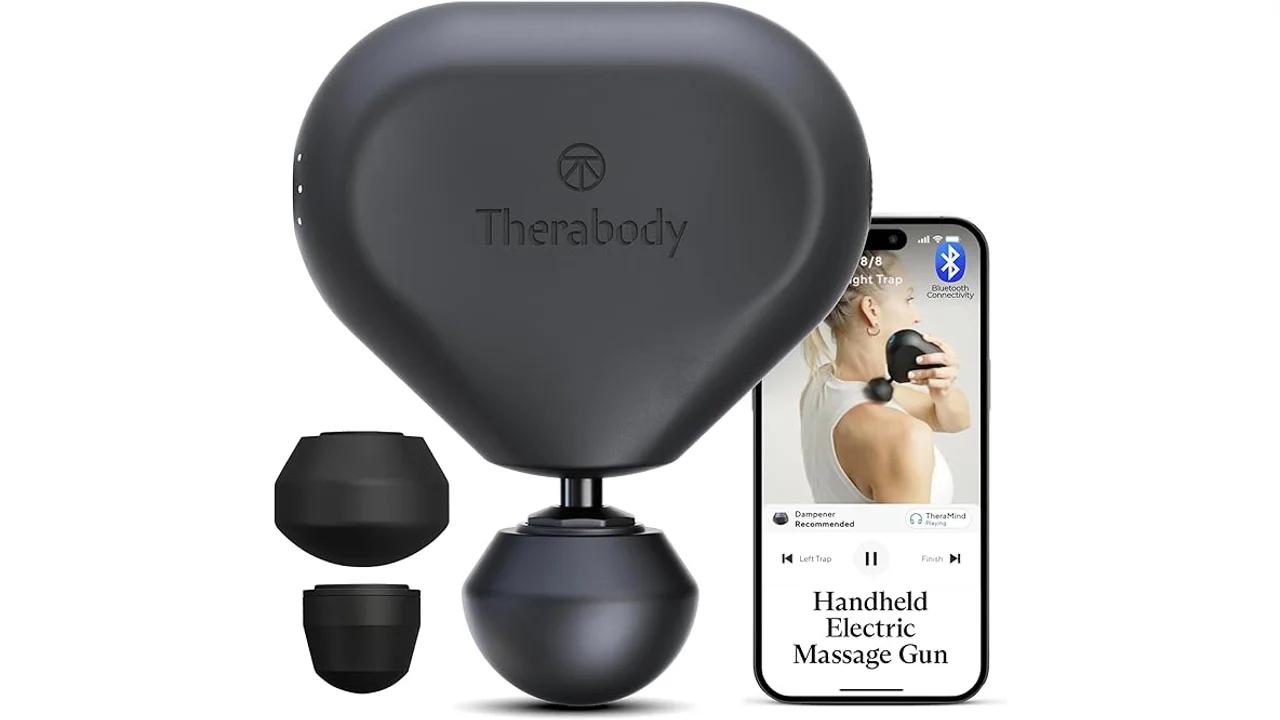
Theragun Mini (2nd Gen)
Portable percussive massager designed for post-activity muscle recovery
Why consider itCommonly applied to the large muscle groups around a sore tendon — calves for Achilles and calf issues, forearms for elbow and wrist issues — rather than directly on the painful tendon or joint. Follow the manufacturer's instructions and check with a clinician before use on an injured area.
Skip if you just need basic soreness relief — a foam roller costs far less.
See today's price on Amazon →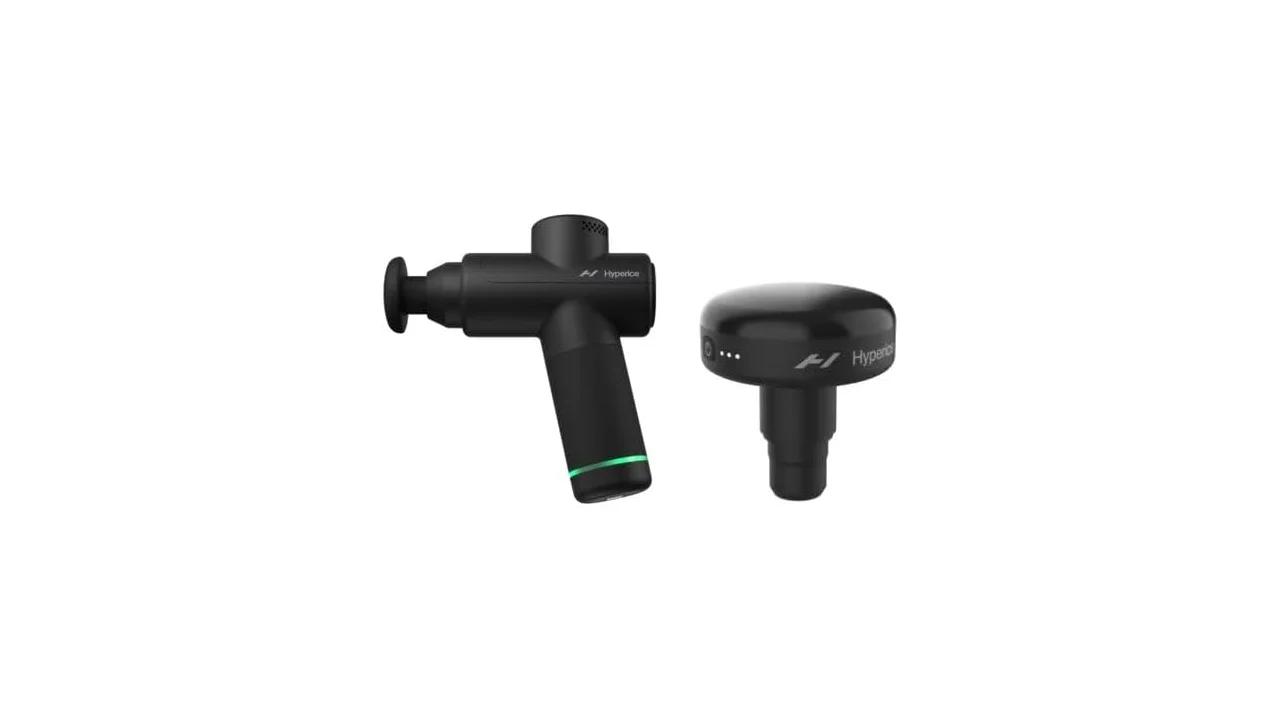 Also helpful
Hyperice Hypervolt Go 2 Massage Gun
Compact, quiet percussive massager for post-play muscle recovery
Why consider itUse it on the muscle belly around the sore area, not directly on a tendon or joint. One to two minutes per muscle group after play is plenty.
Skip if you already own a massage gun or a foam roller covers your needs — this is a lighter, quieter second gun, not a new category of relief.
See today's price on Amazon →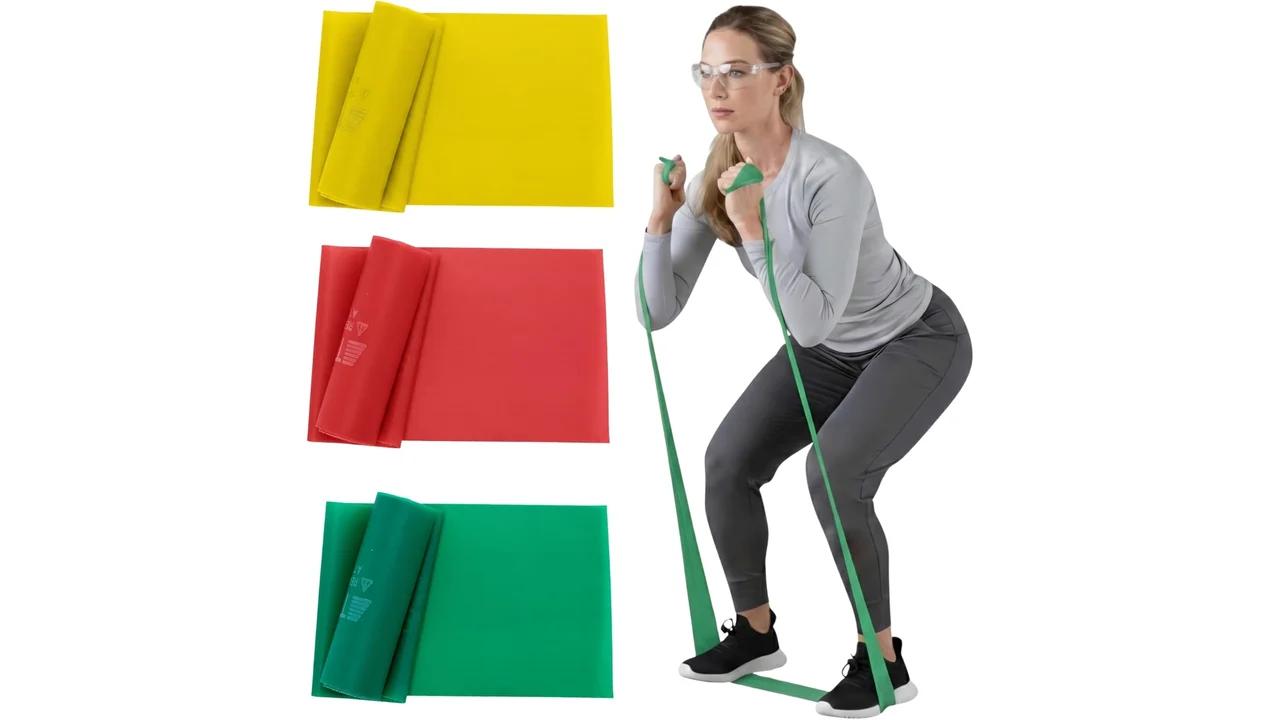 Best Exercise Tool
TheraBand Resistance Bands Set — Beginner Kit
Latex resistance bands for the strengthening work behind tendon recovery
Why consider itStart with the lightest band and progress only when you can do 3 sets of 15 pain-free — bands are how the eccentric strengthening from the guides actually gets done at home.
Skip if you already have a set of bands or a FlexBar — this duplicates the same strengthening work.
See today's price on Amazon →See the full gear list for Rotator Cuff ↓ — every option ranked, with what to skip. As an Amazon Associate I earn from qualifying purchases.
What Is a Rotator Cuff Injury?
The rotator cuff is made of four muscles — supraspinatus, infraspinatus, teres minor, and subscapularis — whose tendons form a cuff around the head of the upper arm bone. Their job is to keep the ball of the shoulder centered in its shallow socket while the big arm muscles generate power. Because the socket is shallow, the shoulder depends on these small muscles far more than most joints depend on their stabilizers. The supraspinatus — the topmost of the four — is often the first to become irritated, partly because it passes through a narrow space beneath the bony roof of the shoulder, where it can be pinched during overhead motion.
Rotator cuff tendinopathy is the overuse pattern: the tendon becomes painful, thickened, and less tolerant of overhead load, usually without a single dramatic injury. A rotator cuff tear is a structural break in the tendon — partial (part of the tendon thickness) or full-thickness (all the way through). Tears can happen suddenly, for example after a fall or one violent overhead, or they can develop gradually on top of long-standing tendinopathy. Tendon quality also changes with age, and imaging studies commonly find cuff tears in older adults who have no symptoms at all — so a scan result on its own does not tell the whole story, and a clinician's examination matters.
The practical distinction for a player: tendinopathy usually improves with progressive strengthening and load management, while a significant tear may need a longer, more careful path and sometimes a surgical discussion. Either way, the first step is the same — calm the pain, restore gentle movement, then rebuild strength gradually.
Why Pickleball Stresses the Rotator Cuff
Pickleball asks a lot of the shoulder in a small court, and several patterns load the cuff heavily:
- Overhead serves — especially power serves hit with a big wind-up, which load the cuff at the top of the motion.
- Smashes at the kitchen line — the most forceful overhead in the sport, often hit while reaching and off-balance.
- Reaching high for lobs — the arm is overhead and extended, the position where the cuff works hardest.
- High dinks with the arm elevated — even soft shots load the cuff when the arm is held up and out.
- Sudden volume spikes — tournament weekends and multi-session days multiply overhead reps far beyond a normal week.
- Arming the overhead — hitting smashes with the arm alone instead of driving through the legs and rotating the core.
- Age and prior shoulder history — tendon quality changes with age, and a previously irritated cuff is more easily irritated again.
How to Recognize Rotator Cuff Problems
Cuff problems usually announce themselves around overhead motion and at night. If several of these apply, the cuff is a likely source — but shoulder pain has many causes, and persistent symptoms deserve a clinician's assessment rather than a self-diagnosis.
- MildA dull ache at the top or front of the shoulder after a session.
- MildStiffness when reaching overhead or behind your back, especially first thing in the morning.
- MildMild soreness the morning after a heavy overhead session that fades during the day.
- ModeratePain during serves and smashes, particularly at the top of the swing.
- ModerateAching at night when lying on the affected shoulder, sometimes disturbing sleep.
- ModerateWeakness lifting the arm above shoulder height, or a feeling that the arm is heavy.
- SevereSudden sharp pain during a specific overhead, with immediate weakness — a possible tear.
- SevereInability to lift the arm above shoulder height at all.
- SevereThe arm gives way or feels unstable during overhead motion.
When It's SeriousSudden weakness or inability to lift the arm after a specific overhead or a fall, shoulder pain following trauma, or night pain that persists for weeks all warrant prompt medical evaluation. A significant tear is best assessed early, because the management — and the timing of any specialist referral — depends on how much of the tendon is involved.
Immediate Self-Care
For early cuff tendinopathy, the pattern that helps most players is simple: take the overheads out for a while, keep the shoulder moving gently, and rebuild the small cuff muscles once pain settles. It is a slow-build approach, not a quick fix — the cuff is small tissue, and it adapts over weeks rather than days, so patience in the first fortnight usually pays off later.
Do This
- +Relative rest from overheads is commonly recommended — not total rest. Many players can keep playing with groundstrokes and low dinks while serves and smashes are paused.
- +Icing the shoulder for 10–15 minutes after play is widely used for symptom relief in the first couple of weeks.
- +Pendulum swings (see exercises) keep the joint moving gently without loading the cuff — a good first exercise in a flare-up.
- +Starting band external rotations (see exercises) once pain has settled is the most commonly recommended strengthening for the cuff, because it targets the small external rotator muscles directly.
- +Paying attention to posture and scapular position helps — shrugging the shoulder up toward the ear during overheads is a common habit that adds cuff load.
Avoid This
- ×Avoid smashing through pain. An overhead that hurts is loading an irritated tendon, and repeating it usually prolongs recovery.
- ×Avoid heavy overhead lifting and aggressive stretching into pain — both can aggravate an irritated cuff.
- ×Avoid sleeping on the painful shoulder, which often worsens night aching.
- ×Avoid treating a scan result as a diagnosis on its own. Imaging findings are common in pain-free shoulders, so discuss what a scan means with a clinician who has examined you.
Commonly Recommended Exercises
These are general descriptions of exercises that are often part of rehabilitation protocols for this condition. Individual needs vary — consult a licensed physical therapist or physician before starting any exercise program, and stop any movement that causes sharp pain.
Medical disclaimer: Consult with a doctor or licensed physical therapist before beginning any exercise program. This information is for educational purposes and is not a substitute for professional medical diagnosis or treatment. Stop any activity that causes sharp pain.
Pendulum Swing
Gentle, gravity-assisted mobility that decompresses the shoulder joint. Excellent first-line exercise for an acute shoulder flare-up.
How to do it
- 1.Lean forward, supporting yourself with your non-painful arm on a chair or table.
- 2.Let your painful arm hang straight down, completely relaxed.
- 3.Use your body to swing the arm — small circles clockwise for 30–60 seconds.
- 4.Switch to counter-clockwise circles.
- 5.Finish with gentle forward-back swings.
Using the shoulder muscles to move the arm. The entire point is that gravity and body motion — not the shoulder — do the work.
External Rotation with Resistance Band
Targets the infraspinatus and teres minor — the small rotator cuff muscles that stabilize the shoulder during overhead shots. Weakness here is a primary driver of pickleball shoulder strain.
How to do it
- 1.Anchor a light resistance band at waist height.
- 2.Stand sideways to the anchor. Hold the band with the arm furthest from the anchor.
- 3.Keep your elbow tucked against your side, bent 90 degrees.
- 4.Rotate your forearm outward, away from your body, keeping the elbow pinned to your ribs.
- 5.Return slowly over 2 seconds. Complete 12 reps. Three sets.
Letting the elbow drift away from the body. If the elbow moves, the rotator cuff stops working and the bigger muscles take over.
Cross-Body Shoulder Stretch
Targets the posterior capsule of the shoulder, which tightens with repetitive overhead motion.
How to do it
- 1.Bring your painful arm across your chest at shoulder height.
- 2.Use your other hand to gently pull the arm closer to your chest.
- 3.Hold 30 seconds. You should feel a stretch at the back of the shoulder, not pain at the front.
- 4.Release. Repeat three times.
Pulling at the elbow. Cup the upper arm just above the elbow instead — pulling at the joint itself can irritate it.
Child's Pose
Gentle decompression of the lumbar spine. Low-risk posture you can hold for long periods to release chronic tension.
How to do it
- 1.Kneel on the floor with your big toes touching and knees apart.
- 2.Sit your hips back toward your heels.
- 3.Walk your hands forward along the floor, lowering your chest between your thighs.
- 4.Rest your forehead on the floor or on stacked hands.
- 5.Breathe deeply into the back ribs. Hold 60–90 seconds.
Forcing the hips down if the tissue won't allow it. Put a pillow between the calves and thighs for comfort — forcing a position defeats the relaxation purpose.
Equipment That May Help
Ranked by how targeted each product is for your condition. These products may support recovery — they are not a substitute for medical care, and none of them cures the injury on its own. As an Amazon Associate I earn from qualifying purchases. How we choose →
Badges: Best Match is the highest overall fit for this injury by our scoring (evidence 40%, condition fit 30%, user reports 20%, durability 10%). Price bands are approximate, not live prices.
Theragun Mini (2nd Gen)
Portable percussive massager designed for post-activity muscle recovery
Does not do — cure the injury on its own. It supports recovery alongside rest, exercises, and medical care when those are needed.
Why consider itCommonly applied to the large muscle groups around a sore tendon — calves for Achilles and calf issues, forearms for elbow and wrist issues — rather than directly on the painful tendon or joint. Follow the manufacturer's instructions and check with a clinician before use on an injured area.
Skip if you just need basic soreness relief — a foam roller costs far less.
Why this product — our top fit for this injury by our scoring. The clinical evidence supports this product's category — this exact model has not been independently tested.
Paid link · We may earn a commission from qualifying purchases.
Hyperice Hypervolt Go 2 Massage Gun
Compact, quiet percussive massager for post-play muscle recovery
Does not do — cure the injury on its own. It supports recovery alongside rest, exercises, and medical care when those are needed.
Why consider itUse it on the muscle belly around the sore area, not directly on a tendon or joint. One to two minutes per muscle group after play is plenty.
Skip if you already own a massage gun or a foam roller covers your needs — this is a lighter, quieter second gun, not a new category of relief.
Why this product — our top fit for this injury by our scoring. The clinical evidence supports this product's category — this exact model has not been independently tested.
Paid link · We may earn a commission from qualifying purchases.
TheraBand Resistance Bands Set — Beginner Kit
Latex resistance bands for the strengthening work behind tendon recovery
Does not do — cure the injury on its own. It supports recovery alongside rest, exercises, and medical care when those are needed.
Why consider itStart with the lightest band and progress only when you can do 3 sets of 15 pain-free — bands are how the eccentric strengthening from the guides actually gets done at home.
Skip if you already have a set of bands or a FlexBar — this duplicates the same strengthening work.
Why this product — our top fit for this injury by our scoring. The clinical evidence supports this product's category — this exact model has not been independently tested.
Paid link · We may earn a commission from qualifying purchases.
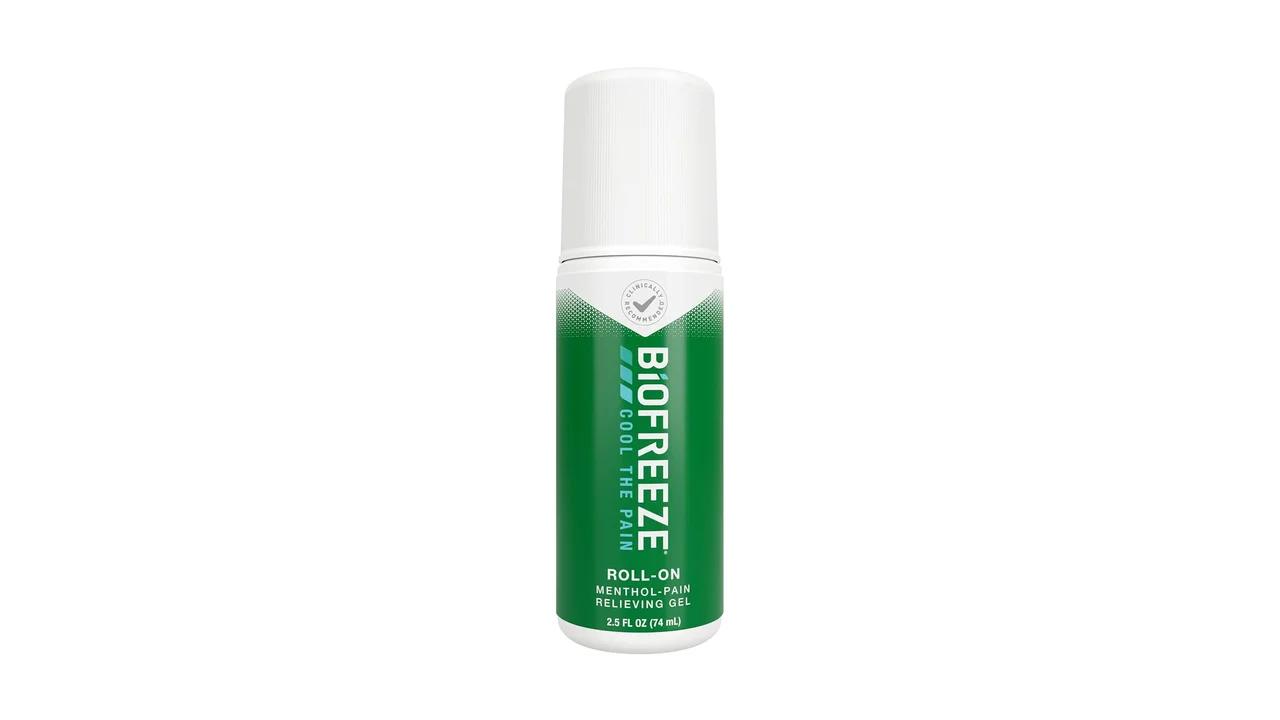
Biofreeze Pain Relief Roll-On
Topical menthol-based product marketed for temporary muscle discomfort
Does not do — cure the injury on its own. It supports recovery alongside rest, exercises, and medical care when those are needed.
Why consider itFollow the product label for usage instructions and precautions. Not intended for use on broken skin or for long-term pain management without medical guidance.
Skip if you want lasting relief — this masks pain temporarily, it doesn't fix the cause.
Why this product — a supporting option for this injury by our scoring. The clinical evidence supports this product's category — this exact model has not been independently tested.
Paid link · We may earn a commission from qualifying purchases.
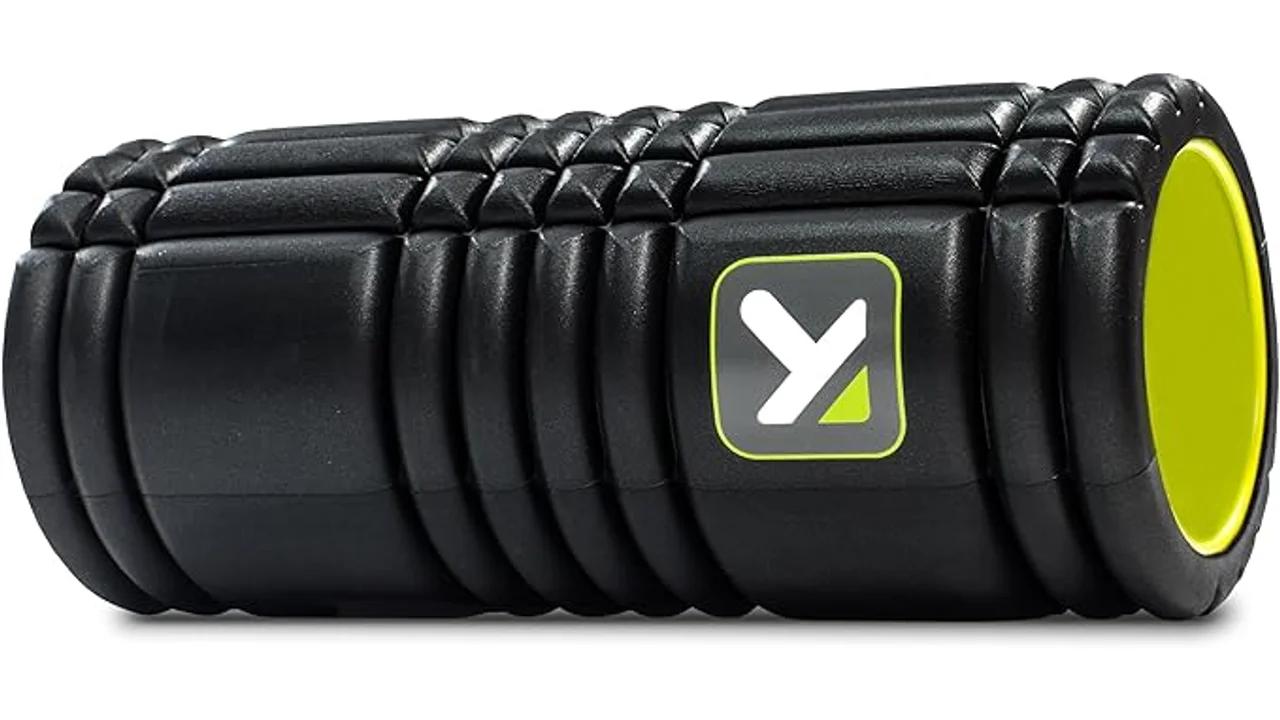
TriggerPoint GRID Foam Roller
Multi-density foam roller designed for self-myofascial release across major muscle groups
Does not do — cure the injury on its own. It supports recovery alongside rest, exercises, and medical care when those are needed.
Why consider itA common approach is to roll each muscle group for roughly 60–90 seconds. Avoid rolling directly over bony areas or the lower back spine.
Skip if you travel light — it's bulky; a lacrosse ball does the same job on the road.
Why this product — a supporting option for this injury by our scoring. The clinical evidence supports this product's category — this exact model has not been independently tested.
Paid link · We may earn a commission from qualifying purchases.
When to See a Doctor
Red Flags
- Sudden weakness or inability to lift the arm after an overhead or a fall.
- Shoulder pain following a fall or other trauma.
- Night pain that persists for weeks and disturbs sleep.
- Symptoms that do not improve after 6–8 weeks of consistent self-care.
- The shoulder feels unstable, catches, or clicks painfully during movement.
Primary care or sports medicine physicians can make the initial assessment, and physical therapy is the usual first-line treatment for tendinopathy — a PT can tailor the strengthening program and check shoulder mechanics. An orthopedic shoulder specialist is the referral for suspected significant tears or cases that do not respond to rehab. Ultrasound is often used as a first imaging step; MRI gives the most detailed picture of the tendon.
Preventing Rotator Cuff Problems — Warm Up, Strengthen, Use Your Legs
The cuff is small and it does a big job, so it rewards a little regular maintenance. A short shoulder warm-up, twice-weekly cuff strengthening, and overheads driven by the legs rather than the arm cover most of the prevention picture.
- 01Warm up the shoulders before every session: arm circles, band pull-aparts, and a few easy overheads before any full-power smash.
- 02Strengthen the external rotators 2–3 times per week with a light resistance band. These are the small muscles that stabilize the shoulder — they fatigue fast and recover slowly.
- 03Use your legs and core on overheads. Drive up through the legs and rotate the trunk instead of muscling the ball with the arm alone.
- 04Vary your serves. Hitting a maximum-effort overhead serve on every point loads the same tendon the same way, hundreds of times a session.
- 05Ramp overhead volume gradually. Tournament weekends are the classic spike — if you normally play twice a week, a three-day tournament is a big jump in overhead load.
- 06Stretch the back of the shoulder. The posterior capsule tightens with repetitive overhead motion, and a cross-body stretch after play helps keep it mobile.
Rotator Cuff Recovery Timeline
Recovery from this condition typically moves through several phases. Timelines vary by individual — treat these as typical ranges, not guarantees. Click each phase to see what's commonly experienced and the gear often used during that stretch.
Stage 1 — Calm It Down (Weeks 1–2)
Aching with overheads and at night. Stiffness reaching up or behind the back. Overheads are off the table for now.
Pause serves and smashes; keep playing below shoulder height if pain allows. Ice after play. Pendulum swings and gentle cross-body stretches daily. No heavy loading yet.
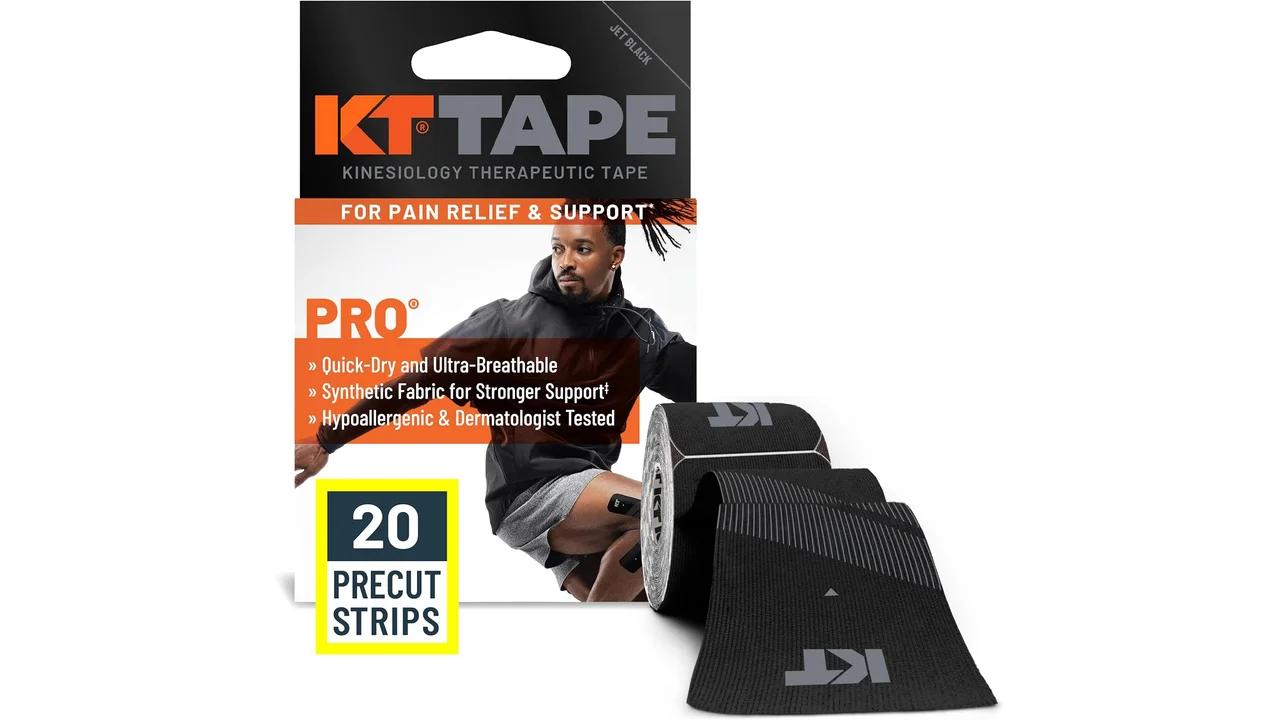
As an Amazon Associate I earn from qualifying purchases. Always consult a clinician before adopting new gear for an injury.
Rotator Cuff — FAQ
Can I play pickleball with rotator cuff pain?
Often yes, with overheads removed. Many players keep playing with groundstrokes, low dinks, and underhand-style serves while the cuff recovers, because the shoulder still gets gentle movement without the overhead load. Pause serves and smashes until pain settles, and stop if pain is sharp or the arm feels weak.
What is the difference between rotator cuff tendinopathy and a tear?
Tendinopathy is a gradual, overuse-driven change in the tendon — painful and less tolerant of load, but structurally intact. A tear is a break in the tendon, partial or full-thickness, which may happen suddenly or develop on top of long-standing tendinopathy. A clinician's examination, sometimes with ultrasound or MRI, is how the two are distinguished.
How long does rotator cuff tendinopathy take to heal?
With consistent rehab, many cases improve noticeably over 6–12 weeks, though recovery varies widely and some take several months. Tears follow a different timeline and depend on the size and location of the tear. Consistency of the strengthening program — not rest alone — is generally what drives recovery.
Do I need surgery for a rotator cuff tear?
Not always. Many partial tears and even some full-thickness tears are managed without surgery, especially when pain and function improve with physical therapy. Surgery is more often discussed for larger tears, younger active patients, or cases with persistent weakness after a proper rehab trial. It is a decision made with an orthopedic shoulder specialist after imaging and examination.
What is the single most useful exercise for the rotator cuff?
External rotation with a light resistance band is the most commonly recommended starting point, because it directly targets the small cuff muscles that stabilize the shoulder during overheads. It is simple, low-load, and easy to progress. A physical therapist can check your form and tailor the program — elbow position and band resistance matter more than effort. As a rule of thumb, move to a heavier band only when you can complete three sets of fifteen reps with good form and no increase in pain the next day.
Your recovery kit for Rotator Cuff
The gear above is ranked for this exact injury. Start with the Quick Relief Kit at the top of this page if you want the short version — or explore another injury if more than one spot hurts.
Sources & Further Reading
Content on this page synthesizes information from the following publicly available sources. We are not affiliated with these organizations and link out for transparency only.
- 01American Academy of Orthopaedic Surgeons (OrthoInfo). Rotator Cuff Tears
- 02Cleveland Clinic. Rotator Cuff Tendinitis and Tears
- 03ChoosePT (American Physical Therapy Association). Physical Therapy Guide to Rotator Cuff Injuries
- 04Mayo Clinic. Rotator Cuff Injury
Players with Rotator Cuff often deal with these too — the same movements that strain one area load the others.
Related Injuries
Further Reading
The Complete Guide to Pickleball Injuries
Every common pickleball injury explained. Identify what's wrong, find the right recovery protocol, and learn when to see a doctor. Updated 2026.
The Pickleball Recovery Protocol
The evidence-informed recovery protocol for pickleball players. Session-by-session framework: warm-up, post-play routine, weekly maintenance.
How to Prevent Pickleball Injuries
The evidence-informed playbook for preventing pickleball injuries. Shoes, bracing, warm-up, strength work, and technique adjustments that actually work.
Injury Finder
Answer two questions — body area, then exact spot — and we'll point you to the guides, warning signs, and gear that match your pain.
Where it hurts
Rotator Cuff — see the full body map