Falls & Fractures
Falls are the dominant injury mechanism for older pickleball players — more common than any single overuse injury, and more consequential. A fall on court or at home can mean a bruise and a scare, or it can mean a fracture. Hip fracture is the classic serious outcome: it often requires surgery and a long recovery, and it can be the start of a bigger decline in independence. The good news is that fall risk is not fixed. Balance and leg strength respond to training at any age, vision and footwear are correctable, and most court falls have a recognizable pattern — backpedaling for a lob, lunging for a wide dink, or simply running out of energy late in a long session. This page is a prevention guide first: how to make yourself steadier, what to fix around the house and on the court, and what to do if a fall does happen.
Affiliate disclosure: As an Amazon Associate I earn from qualifying purchases. This does not affect our recommendations or rankings.
Medical disclaimer: Consult with a doctor before beginning any exercise program or using any product described on this page. This information is for educational purposes and is not a substitute for professional medical diagnosis or treatment.
What helps fastest for Falls & Fractures
Test your balance: single-leg stand near a wall, 30 seconds each side. Start daily balance practice. Do the home safety sweep and fix the easy hazards. Book a vision check and a medication review. Supportive insoles can help if your shoes feel flat or unsupportive.
These won't cure the injury — nothing you buy will. They reduce symptoms and manage load while the tissue heals, so you can keep moving without making it worse.
 Our pickBest for Court Play
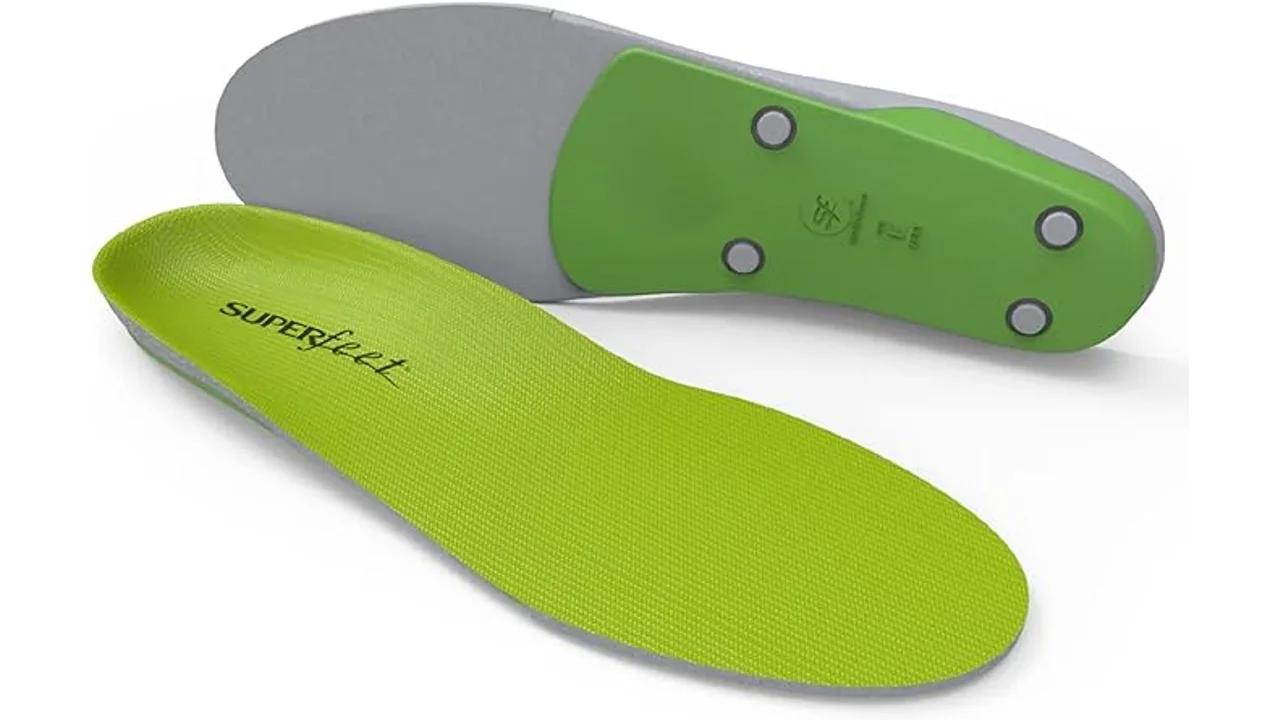
Superfeet GREEN Insoles
Structured insoles designed to provide arch support for court-sport athletes
Why consider itCan be trimmed to shoe size using the guide lines printed on the insole. Individual fit varies — consider replacing if the shape doesn't match your foot.
Skip if your shoes already have strong built-in arch support.
See today's price on Amazon →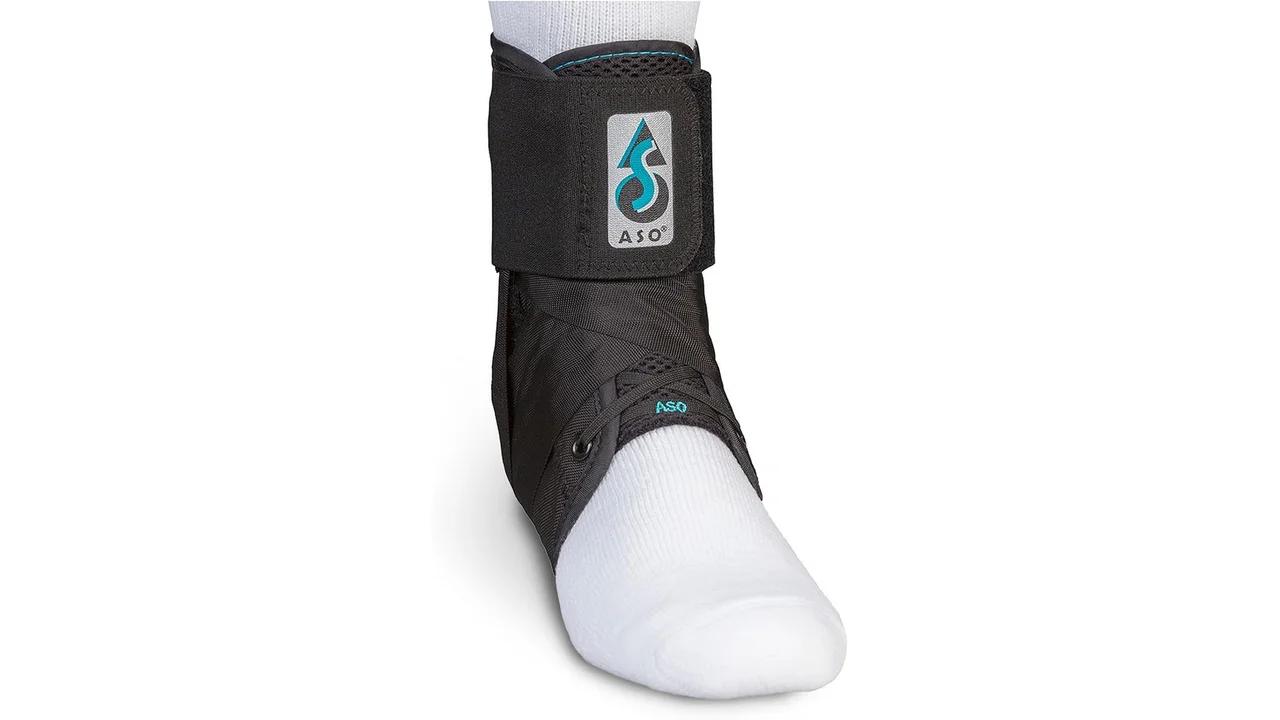 Best Budget Pick
Med Spec ASO Ankle Stabilizer
Lace-up ankle brace with figure-8 straps designed to limit ankle inversion
Why consider itThe brace adds some volume inside the shoe. Pairing with a low-profile court shoe is a common approach.
Skip if your ankle is fully healthy — this is for instability or a sprain history.
See today's price on Amazon →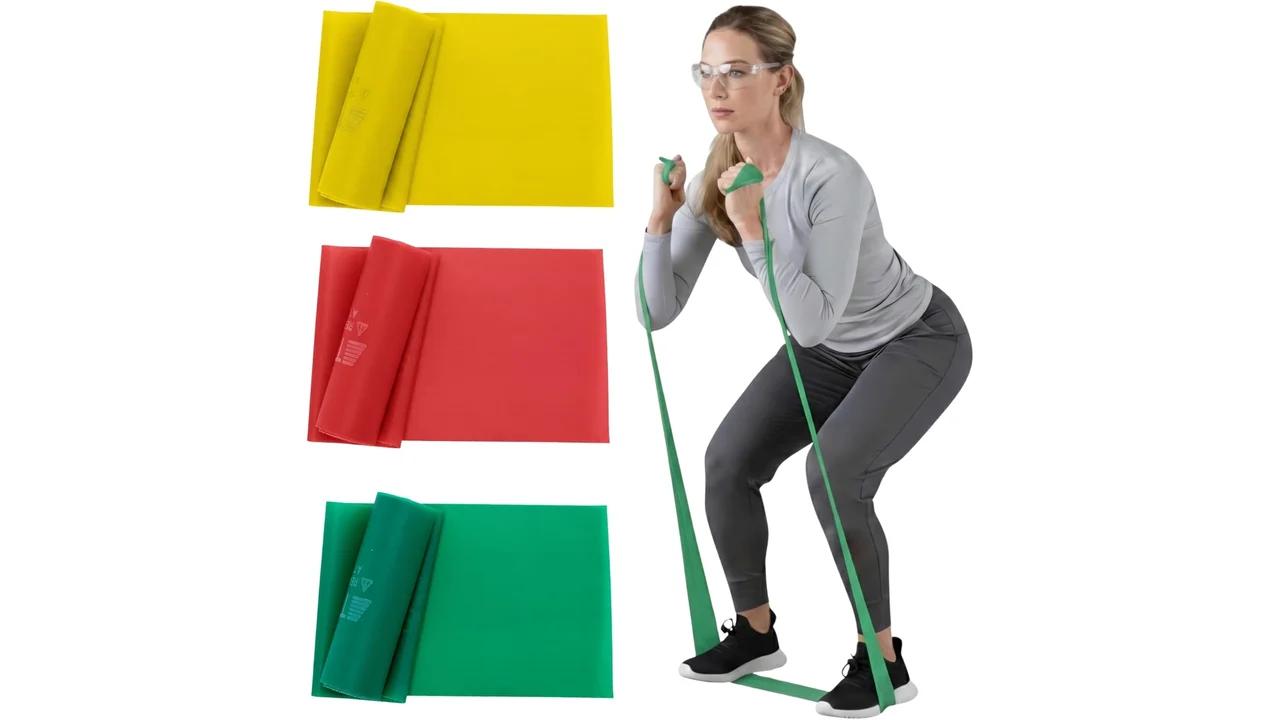 Best Exercise Tool
TheraBand Resistance Bands Set — Beginner Kit
Latex resistance bands for the strengthening work behind tendon recovery
Why consider itStart with the lightest band and progress only when you can do 3 sets of 15 pain-free — bands are how the eccentric strengthening from the guides actually gets done at home.
Skip if you already have a set of bands or a FlexBar — this duplicates the same strengthening work.
See today's price on Amazon →See the full gear list for Falls & Fractures ↓ — every option ranked, with what to skip. As an Amazon Associate I earn from qualifying purchases.
What Falls Mean for Older Pickleball Players
A fall is a loss of balance that ends with an unintended landing — on the court, on the stairs at home, or on an uneven sidewalk. For younger players, most falls are a bruise and a story. For players 65 and older, the same fall carries a higher chance of fracture, because bones lose density with age and the protective reflexes that break a fall — the quick step, the outstretched hand — slow down. The CDC notes that more than one in four older adults falls each year, and that most falls happen without a dramatic cause: a trip, a slip, or a moment of dizziness.
Fractures from falls follow a pattern. Hip fracture is the most serious and the most feared, because it usually requires surgery and weeks of rehabilitation, and it can permanently change how independently a person lives. Wrist fractures are also common — the natural instinct to break a fall with an outstretched hand — along with shoulder and ankle fractures. A fall can also be a warning sign rather than just bad luck: new dizziness, a medication side effect, or a vision change can all show up first as a fall.
None of this means older players should stop playing. Regular activity is one of the strongest protectors against falls — it maintains the very strength and balance that prevent them. The goal is not to avoid movement but to make movement safer: train balance deliberately, keep leg strength up, and remove the hazards you can control.
Why Pickleball Raises Fall Risk — and How the Court Contributes
Pickleball is a fast, close-quarters game, and several of its signature movements are exactly the ones that challenge balance:
- Backpedaling for lobs — moving backward while tracking a ball overhead is the most common fall mechanism on court.
- Lunging for wide dinks — a sudden lateral reach loads one leg and leaves little margin to recover.
- Kitchen-line scrambles — quick direction changes in a tight space, sometimes with a partner moving the same way.
- Wet or dusty courts — morning dew, leaves, dust, and cracked surfaces all reduce traction underfoot.
- Fatigue late in a long session — reaction time and balance both decline as legs tire, which is when falls often happen.
- Footwear with worn tread or poor lateral support — running shoes, in particular, are tall and soft at the heel and can roll under a lateral load.
- Vision — tracking a fast ball while moving means the eyes are busy, leaving less attention for footing and court position.
Warning Signs Your Fall Risk Is Rising
Falls rarely arrive without warning. These are the early signs that balance, strength, or another risk factor is changing — and the earlier they are addressed, the more can be done about them.
- MildOccasional unsteadiness when turning quickly or changing direction on court.
- MildFeeling wobbly on uneven ground, gravel, or grass.
- MildReaching for a handrail or wall more often than you used to.
- ModerateA stumble or near-fall in the past few months, even if you caught yourself.
- ModerateDifficulty rising from a chair without using your arms.
- ModerateDizziness or light-headedness when standing up quickly.
- SevereA fall in the past year, especially one that caused an injury.
- SevereFeeling afraid of falling and cutting back on activities because of it.
- SevereA loss of balance during play that actually puts you on the ground.
When It's SeriousA fall with a head strike, loss of consciousness, inability to get up, or severe pain or swelling afterward needs urgent medical attention — call emergency services rather than trying to drive yourself. A possible fracture is suspected when a limb cannot bear weight, looks deformed, or is severely painful and swollen after a fall. Any fall, even without injury, is worth mentioning to your doctor at the next visit, because it can be the first sign of a medication issue, a vision change, or another correctable problem.
What to Do After a Fall — and Right Now
Most falls are survivable with a calm, slow response. The minutes after a fall matter, and so do the days after — that is when the follow-up happens that prevents the next one.
Do This
- +After a fall, stay still for a moment and check for pain before moving. If you can, roll onto your side, get onto hands and knees, and use a sturdy chair to get up slowly. If you cannot get up, or you have severe pain, call for help rather than struggling.
- +Tell your doctor about any fall, even one that did not hurt. Clinicians consider a fall a useful clue — it can point to a medication side effect, a vision problem, or a new medical issue.
- +Start balance practice right away. Single-leg balance near a wall or counter (see exercises) is a simple daily habit that builds steadiness over weeks.
- +Ask your doctor or pharmacist to review your medications. Some common medicines can cause dizziness, sleepiness, or a drop in blood pressure on standing — and the more medicines involved, the higher the risk.
- +Make the home safer in one pass: remove throw rugs, add night lights on the route to the bathroom, put grab bars in the shower, and keep cords and clutter off walking paths.
Avoid This
- ×Avoid ignoring a fall because you feel fine afterward. A fall without injury is still information your clinician can use.
- ×Avoid rushing back onto the court the same day after a fall. Give yourself time to check for delayed pain or swelling.
- ×Avoid walking on court in smooth-soled shoes, socks, or worn-out trainers — traction and lateral support matter more than cushioning.
- ×Avoid stopping all activity out of fear of falling. Inactivity weakens balance and leg strength further, which raises fall risk. Build steadiness gradually instead, and ask a physical therapist for a program if fear is limiting you.
Commonly Recommended Exercises
These are general descriptions of exercises that are often part of rehabilitation protocols for this condition. Individual needs vary — consult a licensed physical therapist or physician before starting any exercise program, and stop any movement that causes sharp pain.
Medical disclaimer: Consult with a doctor or licensed physical therapist before beginning any exercise program. This information is for educational purposes and is not a substitute for professional medical diagnosis or treatment. Stop any activity that causes sharp pain.
Single-Leg Balance
Retrains the proprioceptors in the ankle — the sensors that tell your brain where your foot is in space. Weak proprioception after an ankle sprain is why people repeatedly re-sprain.
How to do it
- 1.Stand with feet hip-width apart near a wall you can grab if needed.
- 2.Lift one foot off the ground. Hold for 30 seconds.
- 3.Switch legs. Do three sets per leg.
- 4.Progress: close your eyes during the hold (much harder — builds neural input from the ankle, not vision).
- 5.Further progress: stand on a folded towel or cushion for instability.
Hovering close to the wall the whole time. Use it for safety only — if you're always touching it, the balance system isn't being challenged.
Controlled Step-Ups
Trains the quads, glutes, and knee stabilizers through a functional range of motion. Builds the exact strength pickleball demands during lateral movement.
How to do it
- 1.Stand in front of a sturdy step (4–8 inches to start).
- 2.Place one foot on the step, keeping your weight over the heel — not the toes.
- 3.Drive through the heel of the elevated foot to rise up. Let the other foot tap the step lightly.
- 4.Lower slowly over 3 seconds — the eccentric phase is where strength is built.
- 5.Complete 10 reps on one side before switching.
Pushing off the bottom foot. The working leg should do 100% of the work on both the way up and the way down.
Wall Sit (Isometric Quad Hold)
Isometric quad contractions are one of the best-tolerated knee pain exercises — they build strength without the impact that irritates a sore joint.
How to do it
- 1.Stand with your back flat against a wall, feet about 2 feet out in front.
- 2.Slide down the wall until your thighs are roughly parallel to the floor — or as low as is comfortable.
- 3.Keep your knees behind or directly above your ankles (not past the toes).
- 4.Hold for 20–45 seconds. Stand up. Rest 60 seconds. Repeat three times.
- 5.Add 5 seconds per week as strength improves.
Going too deep, too fast. Start high (small knee bend) and only sink lower as it becomes easy.
Stop if you feel sharp pain under or around the kneecap. A dull burn in the quads is expected and desired.
Glute Bridge
Activates the glutes, which are almost always weak or underused in back pain sufferers. Strong glutes offload the lower back during every bend and rotation.
How to do it
- 1.Lie on your back, knees bent, feet flat on the floor hip-width apart.
- 2.Press through your heels to lift your hips toward the ceiling.
- 3.Squeeze your glutes at the top — don't arch your lower back.
- 4.Hold 2 seconds. Lower slowly. Complete 12 reps for 3 sets.
Arching the lower back at the top instead of finishing with the glutes. Squeeze the butt hard — if the lower back does the work, the exercise is counterproductive.
Clamshells
Activates and strengthens the gluteus medius, the hip muscle responsible for stabilizing the pelvis during lateral movement. Weak glutes medius is the most common hidden cause of hip, groin, knee, and back pain in recreational players.
How to do it
- 1.Lie on your side with both knees bent to about 90 degrees, one on top of the other. Heels aligned with your butt.
- 2.Keep your heels together and your hips stacked — don't let your top hip roll back.
- 3.Slowly lift your top knee as high as you can without rolling your hips backward. The motion opens like a clamshell.
- 4.Pause for 1 second at the top. Slowly lower over 2 seconds.
- 5.Complete 15 reps. Switch sides. Three sets per side.
Rolling the hips back to lift the knee higher. The hips must stay stacked — a smaller range of motion with honest form is far more effective than a larger range achieved by cheating.
Equipment That May Help
Ranked by how targeted each product is for your condition. These products may support recovery — they are not a substitute for medical care, and none of them cures the injury on its own. As an Amazon Associate I earn from qualifying purchases. How we choose →
Badges: Best Match is the highest overall fit for this injury by our scoring (evidence 40%, condition fit 30%, user reports 20%, durability 10%). Price bands are approximate, not live prices.
Superfeet GREEN Insoles
Structured insoles designed to provide arch support for court-sport athletes
Does not do — cure the injury on its own. It supports recovery alongside rest, exercises, and medical care when those are needed.
Why consider itCan be trimmed to shoe size using the guide lines printed on the insole. Individual fit varies — consider replacing if the shape doesn't match your foot.
Skip if your shoes already have strong built-in arch support.
Why this product — our top fit for this injury by our scoring. The clinical evidence supports this product's category — this exact model has not been independently tested.
Paid link · We may earn a commission from qualifying purchases.
Med Spec ASO Ankle Stabilizer
Lace-up ankle brace with figure-8 straps designed to limit ankle inversion
Does not do — cure the injury on its own. It supports recovery alongside rest, exercises, and medical care when those are needed.
Why consider itThe brace adds some volume inside the shoe. Pairing with a low-profile court shoe is a common approach.
Skip if your ankle is fully healthy — this is for instability or a sprain history.
Why this product — our top fit for this injury by our scoring. The clinical evidence supports this product's category — this exact model has not been independently tested.
Paid link · We may earn a commission from qualifying purchases.
TheraBand Resistance Bands Set — Beginner Kit
Latex resistance bands for the strengthening work behind tendon recovery
Does not do — cure the injury on its own. It supports recovery alongside rest, exercises, and medical care when those are needed.
Why consider itStart with the lightest band and progress only when you can do 3 sets of 15 pain-free — bands are how the eccentric strengthening from the guides actually gets done at home.
Skip if you already have a set of bands or a FlexBar — this duplicates the same strengthening work.
Why this product — our top fit for this injury by our scoring. The clinical evidence supports this product's category — this exact model has not been independently tested.
Paid link · We may earn a commission from qualifying purchases.

PowerStep Pinnacle Insoles
Full-length orthotic insoles with built-in arch support for plantar fasciitis relief
Does not do — cure the injury on its own. It supports recovery alongside rest, exercises, and medical care when those are needed.
Why consider itOrdered by shoe size — no trimming needed. Replace your shoe's factory insole with the PowerStep rather than stacking them on top of each other.
Skip if you have very high arches — the Pinnacle is a neutral-arch model; high-arch feet usually do better with a high-arch insole.
Why this product — our top fit for this injury by our scoring. The clinical evidence supports this product's category — this exact model has not been independently tested.
Paid link · We may earn a commission from qualifying purchases.
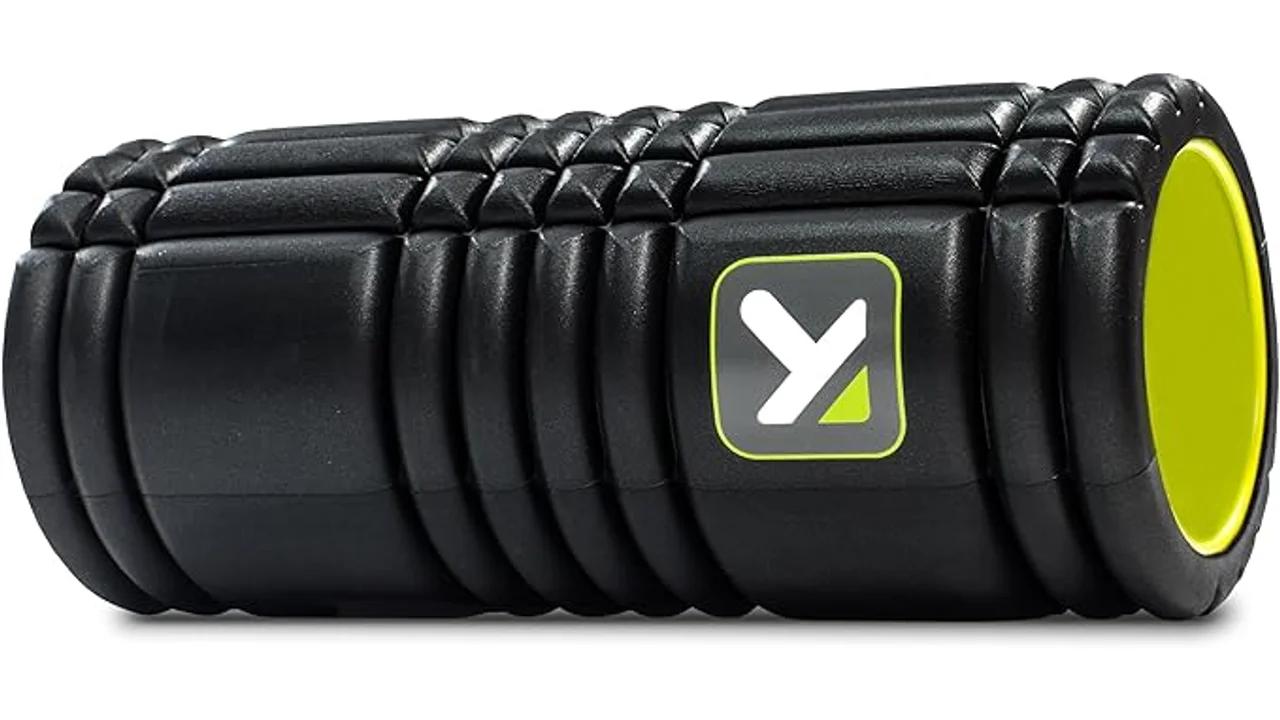
TriggerPoint GRID Foam Roller
Multi-density foam roller designed for self-myofascial release across major muscle groups
Does not do — cure the injury on its own. It supports recovery alongside rest, exercises, and medical care when those are needed.
Why consider itA common approach is to roll each muscle group for roughly 60–90 seconds. Avoid rolling directly over bony areas or the lower back spine.
Skip if you travel light — it's bulky; a lacrosse ball does the same job on the road.
Why this product — a supporting option for this injury by our scoring. The clinical evidence supports this product's category — this exact model has not been independently tested.
Paid link · We may earn a commission from qualifying purchases.
When to See a Doctor
Red Flags
- Any fall with a head strike, loss of consciousness, or confusion — seek emergency care.
- Pain, swelling, or inability to bear weight on a limb after a fall.
- Repeated falls or near-falls over weeks or months.
- Dizziness, fainting, or new confusion, with or without a fall.
- Fear of falling that is shrinking your daily activity or keeping you off the court.
Primary care is the usual first stop — a clinician can review medications, check blood pressure on standing, and screen for vision and bone-health issues. Physical therapists are the best fit for structured balance and strength programs, and they can assess gait and home safety. An annual eye exam is part of the picture, and a clinician may suggest a bone-density check, since stronger bones mean a fall is less likely to become a fracture.
Preventing Falls — Balance, Strength, and a Safer Court
Fall prevention works best as a bundle: train the body, fix the vision and footwear, and remove the hazards. No single step covers everything, but together they make a real difference — and most of them are simple habits rather than major projects.
- 01Train balance 2–3 times per week. Single-leg balance near a wall, heel-to-toe walking, and tai-chi-style slow movement are all commonly recommended and easy to do at home.
- 02Build leg strength. Step-ups, wall sits, glute bridges, and clamshells (see exercises) strengthen the muscles that catch you when you stumble — and they are the same muscles pickleball uses.
- 03Get vision and hearing checked annually. Even small changes in sight are linked to a higher risk of falls, and hearing plays a role in balance too.
- 04Wear proper court shoes with fresh tread and good lateral support, and replace them when the tread wears smooth. Avoid running shoes on court — their tall, soft heels can roll under a lateral load.
- 05Play court-aware. Avoid backpedaling for lobs — turn and run to the ball instead. Call 'mine' and 'yours' with your partner, watch for wet spots and leaves, and sit out the last game when your legs are tired.
- 06Do a home safety sweep. Remove throw rugs, add night lights, fit grab bars in the bathroom, put handrails on both sides of stairs, and keep frequently used items within easy reach so you are not climbing on chairs.
Your Fall-Proofing Program
Recovery from this condition typically moves through several phases. Timelines vary by individual — treat these as typical ranges, not guarantees. Click each phase to see what's commonly experienced and the gear often used during that stretch.
Stage 1 — Baseline & Safety Sweep (Weeks 1–2)
You will learn where your balance actually stands — most people are surprised at how hard single-leg balance is at first. The home safety fixes take an afternoon.
Test your balance: single-leg stand near a wall, 30 seconds each side. Start daily balance practice. Do the home safety sweep and fix the easy hazards. Book a vision check and a medication review. Supportive insoles can help if your shoes feel flat or unsupportive.
As an Amazon Associate I earn from qualifying purchases. Always consult a clinician before adopting new gear for an injury.
Falls & Fractures — FAQ
I am 70 and play three times a week — am I too old for pickleball?
No — regular play is one of the best things you can do for balance and strength, and both protect against falls. The goal is not to stop playing but to play safer: train balance deliberately, keep leg strength up, wear proper court shoes, and sit out when your legs are tired. If you have had a fall or feel unsteady, a physical therapist can build a program around your game.
What is the single most useful exercise for preventing falls?
Single-leg balance is the most commonly recommended starting point, because it directly trains the steadiness that catches you when you stumble. Pair it with leg-strength work — step-ups, wall sits, and glute bridges — and you cover both the balance and the muscle that keep you upright. A few minutes a day, done consistently, is more useful than an occasional long session.
Should I wear an ankle brace to prevent falls?
An ankle brace may help if you have a history of ankle sprains or instability, because it adds support during lateral movement. It is not a general fall-prevention device for everyone, and it does not replace balance training. A clinician or physical therapist can advise whether one suits you and help with fit.
What shoes are safest for pickleball at my age?
Court shoes designed for lateral movement, with fresh tread and good side-to-side support. Avoid running shoes on court — they are built for forward motion, and their tall, soft heels can roll under a lateral load. Replace court shoes when the tread wears smooth, and consider a supportive insole if your shoes feel flat.
What should I do immediately after a fall on court?
Stop playing and stay still for a moment. Check for pain, especially in the hip, wrist, or head. If you can get up, do it slowly using a chair or a partner's help. If you cannot get up, have severe pain, hit your head, or feel confused, call emergency services. Even a fall without injury is worth mentioning to your doctor — it can be the first sign of something correctable.
Your recovery kit for Falls & Fractures
The gear above is ranked for this exact injury. Start with the Quick Relief Kit at the top of this page if you want the short version — or explore another injury if more than one spot hurts.
Sources & Further Reading
Content on this page synthesizes information from the following publicly available sources. We are not affiliated with these organizations and link out for transparency only.
- 01National Institute on Aging (NIH). Preventing Falls at Home: Room by Room
- 02American Academy of Orthopaedic Surgeons (OrthoInfo). Hip Fractures
- 03ChoosePT (American Physical Therapy Association). Physical Therapy Guide to Falls
- 04Centers for Disease Control and Prevention (CDC). STEADI — Older Adult Fall Prevention
Players with Falls & Fractures often deal with these too — the same movements that strain one area load the others.
Related Injuries
Further Reading
The Complete Guide to Pickleball Injuries
Every common pickleball injury explained. Identify what's wrong, find the right recovery protocol, and learn when to see a doctor. Updated 2026.
The Pickleball Recovery Protocol
The evidence-informed recovery protocol for pickleball players. Session-by-session framework: warm-up, post-play routine, weekly maintenance.
How to Prevent Pickleball Injuries
The evidence-informed playbook for preventing pickleball injuries. Shoes, bracing, warm-up, strength work, and technique adjustments that actually work.
Injury Finder
Answer two questions — body area, then exact spot — and we'll point you to the guides, warning signs, and gear that match your pain.
Where it hurts
Falls & Fractures — see the full body map