Best Insoles for Plantar Fasciitis in Pickleball
Arch support, heel cups, and the honest limits of what an insole can do for heel pain.
Affiliate disclosure: As an Amazon Associate I earn from qualifying purchases. This does not affect our recommendations or rankings.
Medical disclaimer: Consult with a doctor before beginning any exercise program or using any product described on this page. This information is for educational purposes and is not a substitute for professional medical diagnosis or treatment.
Plantar fasciitis is one of the most common reasons pickleball players end up on the sideline — a sharp heel pain on the first steps of the morning that eases as the day goes on, then flares again after a long session. An insole can help, but it's worth understanding what it actually does first: it supports the arch and reduces the tension on the plantar fascia while you move. It does not heal the fascia on its own. The healing comes from stretching, load management, and time — the insole buys you comfort while that work happens. This guide compares the insoles and foot tools players actually use, and where each one fits.
Superfeet GREEN Insoles
Structured insoles designed to provide arch support for court-sport athletes
Why consider it — Can be trimmed to shoe size using the guide lines printed on the insole. Individual fit varies — consider replacing if the shape doesn't match your foot.
Skip if your shoes already have strong built-in arch support.
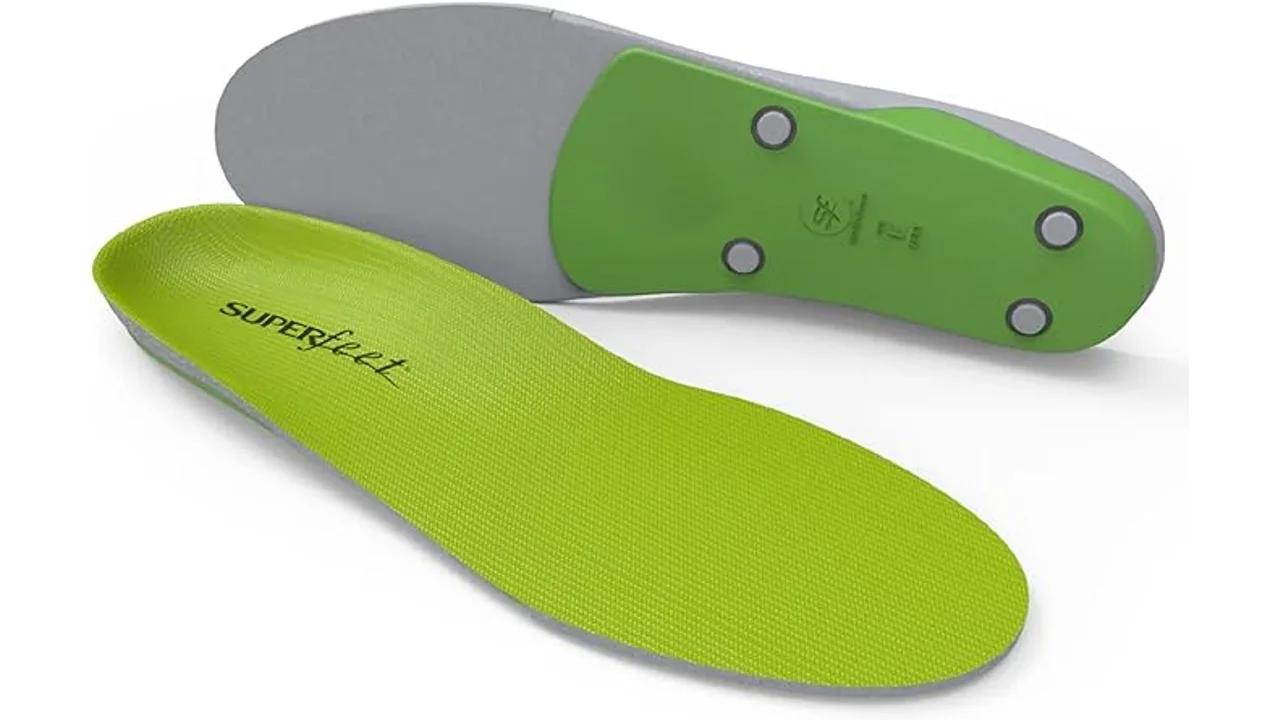
Superfeet GREEN Insoles
Structured insoles designed to provide arch support for court-sport athletes
Does not do — cure the injury on its own. It supports recovery alongside rest, exercises, and medical care when those are needed.
Why consider itCan be trimmed to shoe size using the guide lines printed on the insole. Individual fit varies — consider replacing if the shape doesn't match your foot.
Skip if your shoes already have strong built-in arch support.
Why this product — our top fit for this injury by our scoring. The clinical evidence supports this product's category — this exact model has not been independently tested.
Paid link · We may earn a commission from qualifying purchases.
Picked by our scoring (evidence 40%, condition fit 30%, user reports 20%, durability 10%) — not by commission. How we choose →
What an insole actually does for plantar fasciitis
The plantar fascia is a band of tissue along the bottom of the foot, and it takes a beating in pickleball — every lateral cut, lunge, and stop loads it. An insole helps in two ways. First, arch support: a structured insole holds the arch in its natural shape, which reduces the stretch on the fascia with each step. Second, a heel cup: a deep, cushioned heel cup absorbs some of the impact when the heel strikes the court.
What matters most is the shape, not the softness. A soft, squishy insole feels nice for five minutes and then collapses under load, which is exactly when you need support. The insoles that help plantar fasciitis are firm in the arch and cushioned at the heel — structured enough to hold their shape through a two-hour session.
Which insole do you actually need?
A rough decision framework:
• Overpronation or flat feet — a full-length orthotic with firm arch support and motion control (PowerStep Pinnacle). This is the most structured option, and the one podiatrists most often point to for plantar fasciitis.
• General arch support and comfort — a structured insole you can trim to fit (Superfeet GREEN). The most widely used option, and a good first step if you haven't tried an insole before.
• Recovery after play — a foot roller (Chirp) for the arch itself. Not an insole, but the tool that works the fascia directly after a session.
• Shoes matter as much as insoles — a good insole in a worn-out running shoe won't help. If your court shoes are past 6 months, replace them first. Our court shoes guide covers what to look for.
Top product picks
These are the products players and clinicians most often recommend for plantar fasciitis in pickleball. All are widely available and inexpensive relative to a podiatrist visit. Listed by category.
Superfeet GREEN Insoles
Structured insoles designed to provide arch support for court-sport athletes
Does not do — cure the injury on its own. It supports recovery alongside rest, exercises, and medical care when those are needed.
Why consider itCan be trimmed to shoe size using the guide lines printed on the insole. Individual fit varies — consider replacing if the shape doesn't match your foot.
Skip if your shoes already have strong built-in arch support.
Why this product — our top fit for this injury by our scoring. The clinical evidence supports this product's category — this exact model has not been independently tested.
Paid link · We may earn a commission from qualifying purchases.
PowerStep Pinnacle Insoles
Full-length orthotic insoles with built-in arch support for plantar fasciitis relief
Does not do — cure the injury on its own. It supports recovery alongside rest, exercises, and medical care when those are needed.
Why consider itOrdered by shoe size — no trimming needed. Replace your shoe's factory insole with the PowerStep rather than stacking them on top of each other.
Skip if you have very high arches — the Pinnacle is a neutral-arch model; high-arch feet usually do better with a high-arch insole.
Why this product — our top fit for this injury by our scoring. The clinical evidence supports this product's category — this exact model has not been independently tested.
Paid link · We may earn a commission from qualifying purchases.
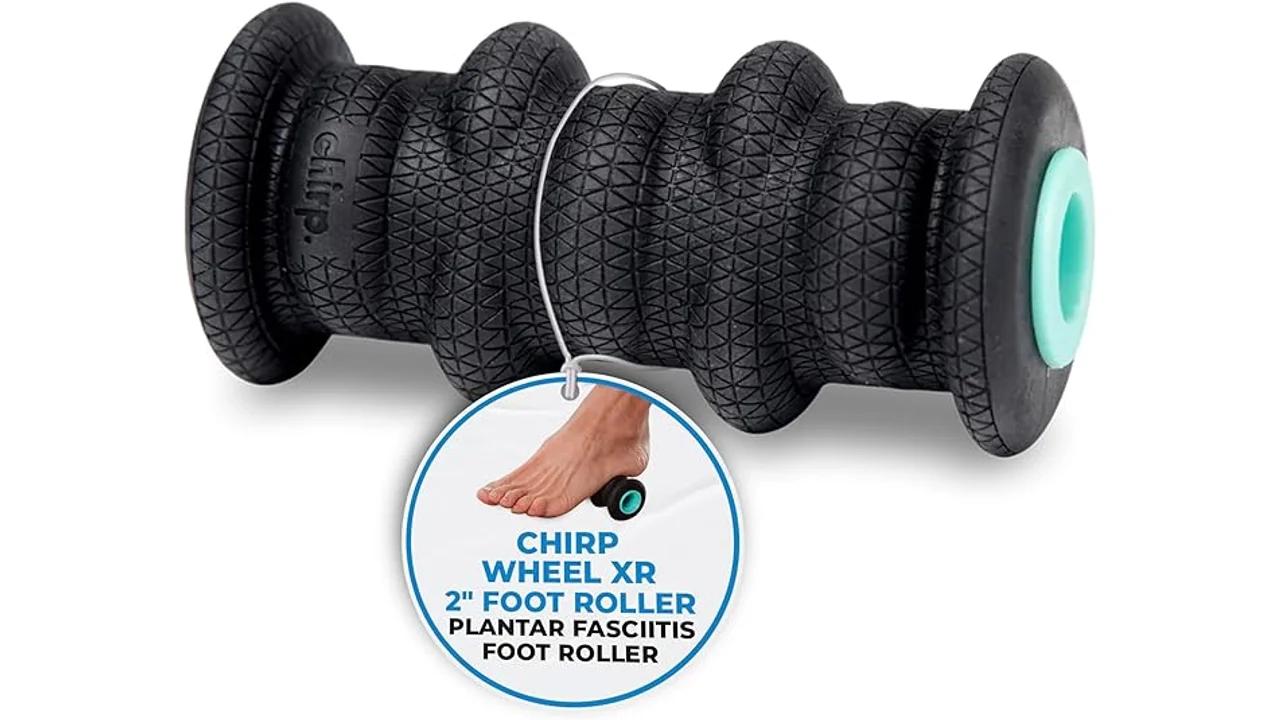
Chirp Foot Roller
Textured foot roller designed to mobilize the plantar surface of the foot
Does not do — cure the injury on its own. It supports recovery alongside rest, exercises, and medical care when those are needed.
Why consider itMany users spend a few minutes per foot after activity. Start with gentle pressure and stop if sharp pain occurs.
Skip if you have sharp heel pain that could be a stress fracture — see a doctor first.
Why this product — our top fit for this injury by our scoring. The clinical evidence supports this product's category — this exact model has not been independently tested.
Paid link · We may earn a commission from qualifying purchases.
What insoles won't fix
An insole is a support, not a cure. The fascia heals through a combination of calf stretching, gradual loading, and time — typically weeks to months, with timelines varying by individual. An insole makes that period more comfortable and lets you keep playing at reduced volume, but it doesn't replace the stretching and strengthening work.
If your heel pain has lasted more than three months, hurts at rest, involves numbness, or started with a sudden sharp pain, see a podiatrist or sports medicine doctor before buying more gear. Those patterns suggest something beyond simple plantar fasciitis, and an insole won't address it.
How to fit and break in an insole
Remove your shoe's factory insole and replace it with the new one — don't stack them, or you'll change the fit and raise your heel too high in the shoe. Trim to size using the guide lines printed on the insole, and wear them for a few hours a day for the first week before playing a full session in them.
Insoles wear out. A good rule is to replace them every 6–12 months of regular use, or sooner if the arch support feels compressed or the heel cup has deformed. If the insole that helped for months stops helping, it's usually worn out — not that your foot got worse.
Which insole fits your foot?
Same heel pain, different tools. The Superfeet is a structured arch support, the PowerStep is a full-length orthotic for overpronation, and the foot roller is the recovery tool for the arch itself.
| Product | Best for | Watch out for |
|---|---|---|
| SuperfeetSuperfeet GREEN Insoles | Structured insoles designed to provide arch support for court-sport athletes | Skip if your shoes already have strong built-in arch support. |
| PowerStepPowerStep Pinnacle Insoles | Full-length orthotic insoles with built-in arch support for plantar fasciitis relief | Skip if you have very high arches — the Pinnacle is a neutral-arch model; high-arch feet usually do better with a high-arch insole. |
| ChirpChirp Foot Roller | Textured foot roller designed to mobilize the plantar surface of the foot | Skip if you have sharp heel pain that could be a stress fracture — see a doctor first. |
As an Amazon Associate I earn from qualifying purchases. Prices change — check the product page for the current price.
Frequently Asked Questions
Do insoles cure plantar fasciitis?
No. Insoles reduce the strain on the fascia while you move, which makes playing and walking more comfortable — but the fascia heals through stretching, gradual loading, and time. Think of the insole as the support that lets you do the rehab work, not a replacement for it.
Superfeet or PowerStep — which is better?
It depends on your foot. Superfeet GREEN is a structured arch support and a good first insole for most players. PowerStep Pinnacle is firmer, with a heel post for motion control — the better pick if your feet roll inward or you have flat feet. Both are solid; the right one is the one that matches your arch.
Should I wear insoles in all my shoes or just court shoes?
All the shoes you walk in, ideally. The fascia loads all day, not just on court — so an insole that only goes in your court shoes leaves most of your steps unsupported. Start with your court shoes, then add a pair to your daily shoes if the morning pain persists.
How long do insoles last?
Typically 6–12 months of regular use. Replace them when the arch support feels compressed, the heel cup has deformed, or the insole that used to help stops helping. Court shoes wear out on a similar schedule — check both at the same time.
When should I see a podiatrist instead of buying insoles?
If your heel pain has lasted more than three months, hurts at rest, involves numbness or tingling, or started with a sudden sharp pain. Those patterns suggest something beyond simple plantar fasciitis, and a clinician can confirm the diagnosis and discuss options like night splints or shockwave therapy.
Related Injury Guides
Plantar Fasciitis
Heel and arch pain from repetitive court movement and improper footwear.
Foot Fatigue
General fatigue and soreness from extended court sessions.
Bunions & Toe Issues
Bunions (hallux valgus) and tailor's bunionette cause pain at the big-toe or pinky-toe joint. Aggravated by lateral court pressure and narrow court shoes.
Keep Reading
Best Pickleball Court Shoes: How to Choose
Court shoes are the single highest-leverage gear choice in pickleball. How to pick the right pair, what to avoid, and when to replace them.
The 5-Minute Pickleball Warm-Up
The 5-minute pickleball warm-up routine that prevents tennis elbow, calf strains, and Achilles issues. Do this before every match.
Build Your Personalized Kit
Put what you just read into action. Our selector cross-references your specific pain points against every product in our database.