Pickleball Paddle Grip Size: The Complete Guide
A grip that's too small or too big quietly loads your elbow and wrist — here's how to get it right.
Affiliate disclosure: As an Amazon Associate I earn from qualifying purchases. This does not affect our recommendations or rankings.
Medical disclaimer: Consult with a doctor before beginning any exercise program or using any product described on this page. This information is for educational purposes and is not a substitute for professional medical diagnosis or treatment.
Most players choose a paddle for its weight, its face, or its price — and never think about the grip. That's a mistake. Grip size changes how hard you squeeze, how much your wrist works on every shot, and how much load reaches the elbow tendons. A grip that's too small makes you over-grip to keep the paddle stable; a grip that's too big forces the wrist into awkward angles. Both patterns feed the two most common upper-body pickleball injuries: tennis elbow and wrist pain. The fix takes five minutes and a ruler.
Why grip size matters
The forearm muscles that control the wrist attach at the elbow — the same tendons involved in tennis elbow. When the grip is too small, you squeeze harder to stop the paddle twisting in your hand, and that extra grip force goes straight through those tendons on every shot. Players who switch to the correct grip size often notice their elbow calms down within a couple of weeks, even without any other change.
A grip that's too large has the opposite problem: it limits wrist snap and forces the hand into a more open position, which loads the wrist itself and reduces control on dinks and resets. Most players err on the small side, because smaller grips feel faster — but 'faster' isn't worth an elbow that aches after every session.
How to measure your grip
Two quick methods, both done with your dominant hand:
The ruler method
Hold a ruler in your palm. Measure from the middle crease of your palm to the tip of your ring finger. That length in inches is a good starting grip size: under 4 inches suggests a 4-inch grip, 4 to 4 3/8 inches suggests 4 1/8, and over 4 3/8 inches suggests 4 1/4 or larger.
The finger-gap test
Hold the paddle with your normal grip. With your other hand, try to slide your index finger into the gap between your fingertips and the heel of your palm. If it fits snugly, the size is right. If there's a big gap, the grip is too large. If you can't fit a finger in at all, it's too small.
Standard sizes and what they mean
Pickleball grips generally run 4 inches (small), 4 1/8 inches (the most common), 4 1/4 inches, and 4 1/2 inches (large). Most adult men land on 4 1/4, most adult women on 4 1/8 — but hand size varies more than gender, so measure rather than guess.
If you're between sizes, the usual advice is to go smaller: you can always build a grip up with overgrips, but you can't shrink one. Players with tennis elbow or wrist pain should be especially careful not to go too small, since the over-gripping that follows is exactly what loads the elbow.
Adjusting with overgrips
Each overgrip layer adds roughly 1/16 inch to the circumference. One overgrip on a 4 1/8 grip gets you close to 4 1/4. Overgrips also improve tackiness, which lets you hold the paddle more loosely — a real benefit if your elbow is already irritated.
Replace overgrips when they feel smooth or shiny; a worn overgrip makes you squeeze harder without noticing. If you've stacked three or more overgrips to reach your size, it's time to buy the right grip size instead — the handle shape gets distorted and the bevels disappear.
Signs your grip is wrong
Elbow pain that shows up during or after play, especially on the outer elbow. Wrist soreness after long sessions. The paddle twisting in your hand on off-center hits. Blisters or calluses forming in unusual spots. A feeling that you have to 'muscle' the paddle to keep it stable. Any of these is worth five minutes with a ruler — it's the cheapest fix in pickleball.
Recommended Gear for This Guide
The products this guide actually names — ranked by fit, with honest limitations. As an Amazon Associate I earn from qualifying purchases. How we choose →
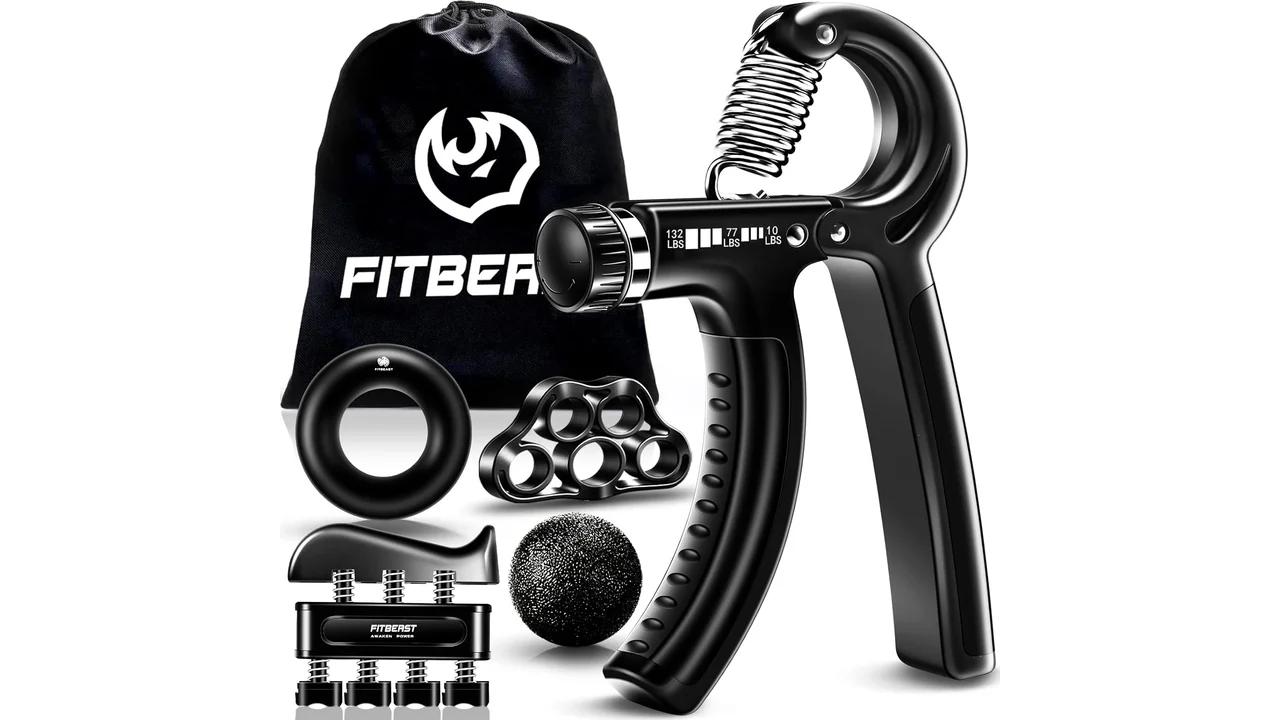
FitBeast Hand Grip Strengthener Kit
Multi-piece grip strengthener set for progressive forearm and hand conditioning
Does not do — cure the injury on its own. It supports recovery alongside rest, exercises, and medical care when those are needed.
Why consider itThe kit includes multiple resistances and a finger exerciser. Starting with the lightest resistance is commonly recommended when rebuilding grip after an injury. A clinician can help choose the right starting load.
Skip if you already have a FlexBar — the grip work overlaps.
Why this product — a supporting option for this injury by our scoring. The clinical evidence supports this product's category — this exact model has not been independently tested.
Paid link · We may earn a commission from qualifying purchases.
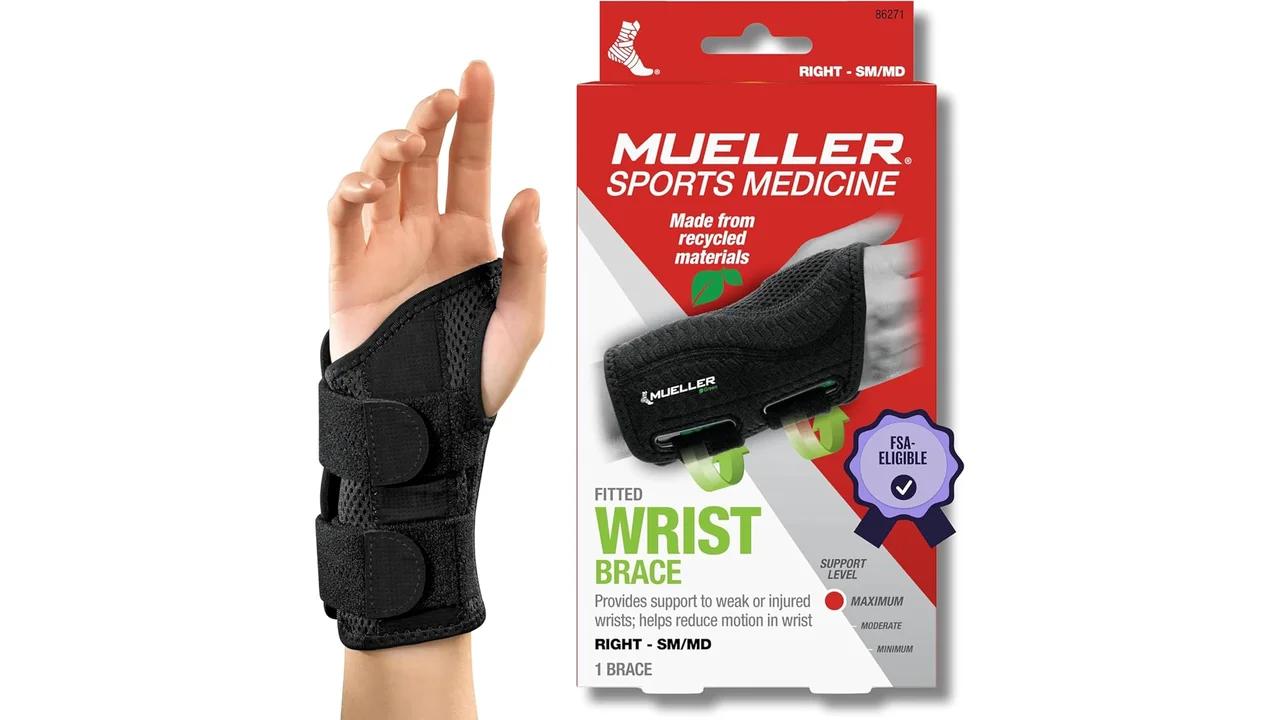
Mueller Fitted Wrist Brace
Fitted wrist brace designed to provide compression and limit extreme wrist motion
Does not do — cure the injury on its own. It supports recovery alongside rest, exercises, and medical care when those are needed.
Why consider itDuration of daily wear varies by individual and injury — consult a clinician for personalized guidance. Many users wear it during activity and remove it during rest periods.
Skip if you only need support for a few hours of play — a simple wrap may be enough.
Why this product — our top fit for this injury by our scoring. The clinical evidence supports this product's category — this exact model has not been independently tested.
Paid link · We may earn a commission from qualifying purchases.
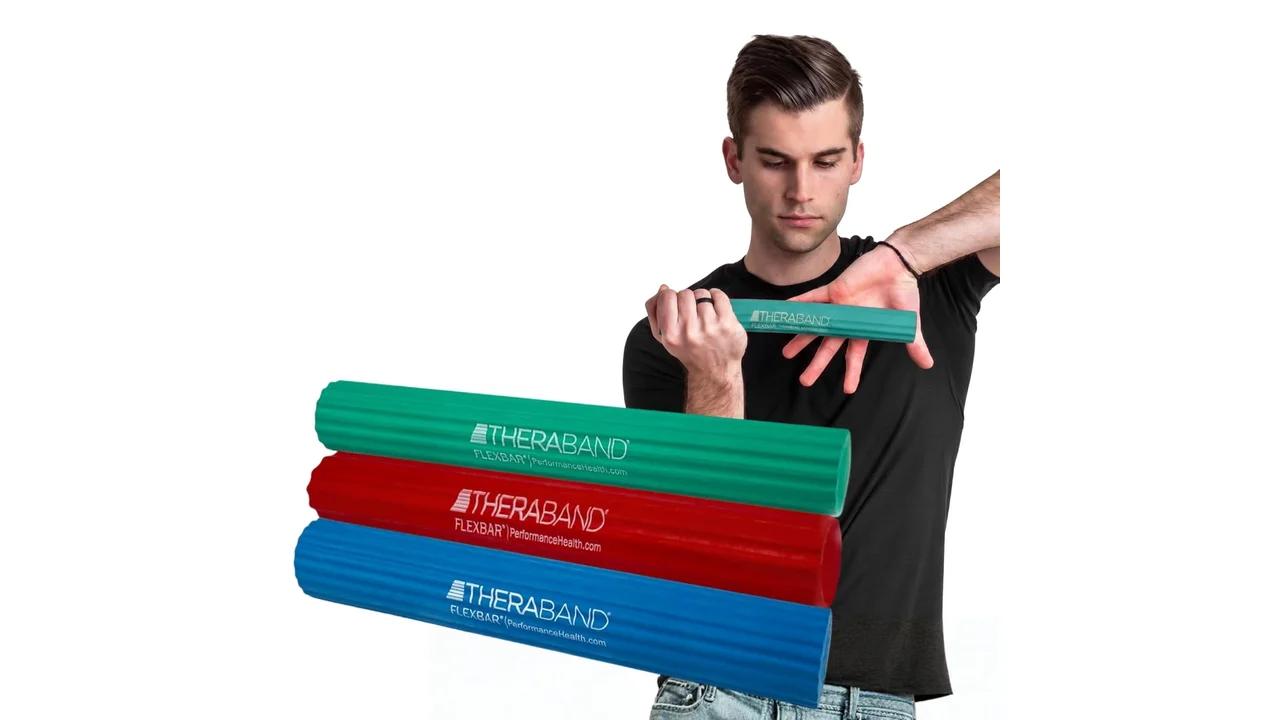
TheraBand FlexBar Resistance Bar
Resistance bar designed for eccentric wrist-tendon loading (the tool used in the Tyler Twist protocol)
Does not do — cure the injury on its own. It supports recovery alongside rest, exercises, and medical care when those are needed.
Why consider itMost protocols start with the Red (medium) resistance bar for tennis elbow. Progress to Green (intermediate) only when Red feels easy. Performing the Tyler Twist with good form beats rushing through heavier resistance.
Skip if your elbow pain is acute (first 1–2 weeks) — wait until the flare settles.
Why this product — our top fit for this injury by our scoring. The clinical evidence supports this product's category — this exact model has not been independently tested.
Paid link · We may earn a commission from qualifying purchases.
Frequently Asked Questions
What's the most common pickleball grip size?
4 1/8 inches is the most common stock size and fits most adult hands. Most men end up at 4 1/4, most women at 4 1/8 — but hand size varies, so measure from your palm crease to your ring fingertip rather than going by averages.
Should I go bigger or smaller if I'm between sizes?
Go smaller. You can build a grip up with overgrips (each adds about 1/16 inch), but you can't shrink one. The exception is players with tennis elbow: don't go so small that you have to over-grip, since that extra squeeze loads the elbow tendons.
Can an overgrip fix a grip that's too small?
Yes, within limits — one or two overgrips add roughly 1/8 inch and improve tackiness, which also lets you hold the paddle more loosely. Beyond two or three layers the handle shape distorts, and you're better off buying the right size.
Does grip size really cause tennis elbow?
It's one contributing factor, not the sole cause — but it's a real one. A grip that's too small makes you squeeze harder on every shot, and that extra grip force travels through the same forearm tendons involved in tennis elbow. Correcting grip size is a cheap, low-effort part of the fix, alongside the Tyler Twist exercise and load management.
Sources & Further Reading
Content on this page synthesizes information from the following publicly available sources. We are not affiliated with these organizations and link out for transparency only.
- 01American Academy of Orthopaedic Surgeons (OrthoInfo). De Quervain's Tendinosis
- 02Mayo Clinic. De Quervain's Tenosynovitis
- 03Cleveland Clinic. De Quervain's Tendinosis
- 04American Academy of Orthopaedic Surgeons (OrthoInfo). Tennis Elbow (Lateral Epicondylitis)
- 05Mayo Clinic. Tendinitis — Symptoms & Causes
Related Injury Guides
Tennis Elbow
Lateral epicondylitis causing outer elbow pain from repetitive swing motion.
Wrist Pain
Repetitive strain from paddle grip and snap shots.
De Quervain's Tenosynovitis
Thumb-side wrist tendon irritation from repetitive paddle flicks and dink-level snap motions. Distinct from general wrist pain.
Keep Reading
Best Tennis Elbow Braces for Pickleball
Counterforce straps, sleeves, or full braces for pickleball tennis elbow? Honest comparison of the best options and when each works.
The Tyler Twist: The Best Tennis Elbow Exercise
The Tyler Twist is the most-researched exercise for tennis elbow. Complete guide to proper form, progression, and the FlexBar you need.
Build Your Personalized Kit
Put what you just read into action. Our selector cross-references your specific pain points against every product in our database.