Best Compression Sleeves, Wrist & Ankle Braces for Pickleball
Light support for the joints pickleball loads hardest — elbows, wrists, and ankles.
Affiliate disclosure: As an Amazon Associate I earn from qualifying purchases. This does not affect our recommendations or rankings.
Medical disclaimer: Consult with a doctor before beginning any exercise program or using any product described on this page. This information is for educational purposes and is not a substitute for professional medical diagnosis or treatment.
Pickleball loads three joints harder than the rest: the elbow (every grip and wrist flick), the wrist (dinking and drives), and the ankle (every lateral cut). Support for these joints comes in three forms — compression sleeves, braces, and tape — and they do different jobs. A sleeve adds warmth and light compression. A brace restricts motion. Tape gives flexible, short-term support. This guide covers all three, what each one is actually for, and the products players tend to choose.
Mueller Fitted Wrist Brace
Fitted wrist brace designed to provide compression and limit extreme wrist motion
Why consider it — Duration of daily wear varies by individual and injury — consult a clinician for personalized guidance. Many users wear it during activity and remove it during rest periods.
Skip if you only need support for a few hours of play — a simple wrap may be enough.
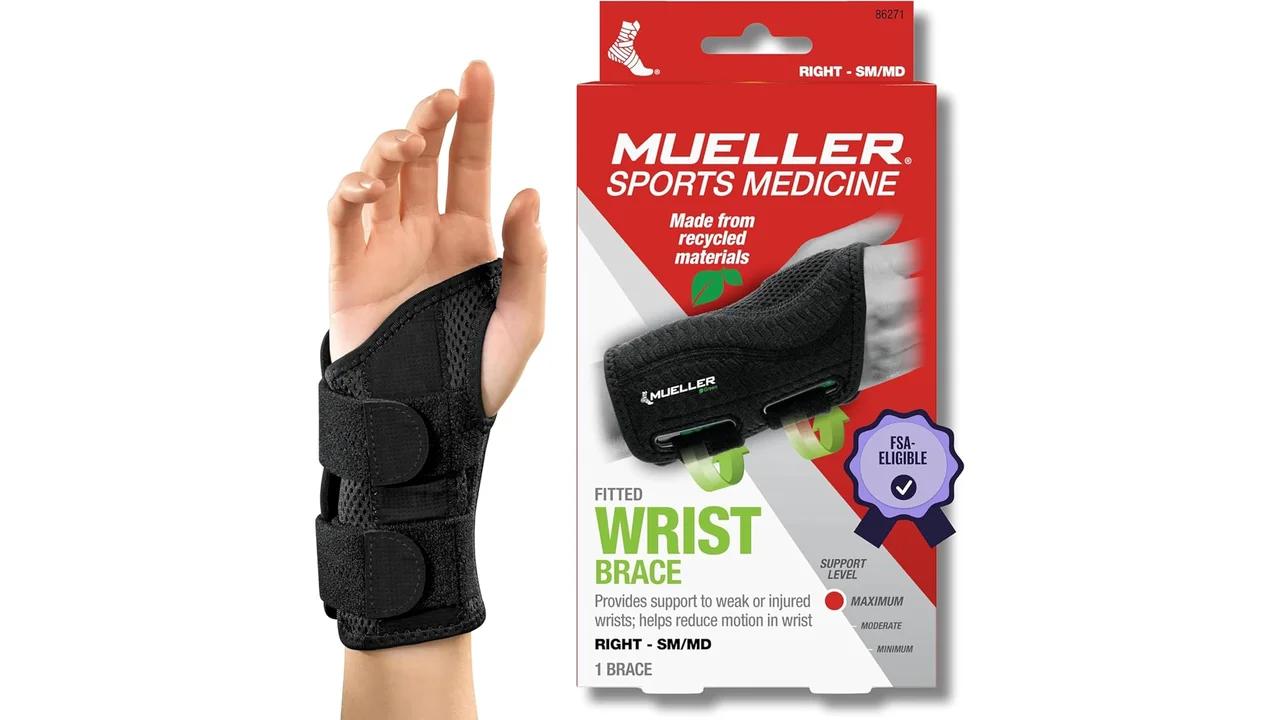
Mueller Fitted Wrist Brace
Fitted wrist brace designed to provide compression and limit extreme wrist motion
Does not do — cure the injury on its own. It supports recovery alongside rest, exercises, and medical care when those are needed.
Why consider itDuration of daily wear varies by individual and injury — consult a clinician for personalized guidance. Many users wear it during activity and remove it during rest periods.
Skip if you only need support for a few hours of play — a simple wrap may be enough.
Why this product — our top fit for this injury by our scoring. The clinical evidence supports this product's category — this exact model has not been independently tested.
Paid link · We may earn a commission from qualifying purchases.
Picked by our scoring (evidence 40%, condition fit 30%, user reports 20%, durability 10%) — not by commission. How we choose →
Sleeve, brace, or tape?
Before picking a product, understand what the three categories actually do. They're not interchangeable.
Compression sleeve
A pull-on sleeve for the elbow or calf. Mechanism: warmth, mild compression, and proprioception. Does not mechanically restrict the joint. Useful for general soreness, mild tendinopathy, and cold-weather play. The McDavid elbow sleeve with HEX padding adds impact protection on top of the compression.
Brace
A structured support — a fitted wrist brace with rigid stays, or a lace-up ankle brace with figure-8 straps. Mechanism: physically limits the motions that load the injured tissue. Useful when a specific motion causes the pain (wrist flicks for tennis elbow, ankle inversion for sprains). Braces are the most targeted option, and the most restrictive.
Kinesiology tape
Elastic tape applied to the skin over the muscle or joint. Mechanism: light, flexible support and sensory feedback — it doesn't restrict motion the way a brace does. Useful for mild support during play when a brace feels like too much, or as a bridge while you're weaning off a brace. KT Tape Pro is the most widely available option.
Which one do you actually need?
A rough decision framework:
• General elbow or calf soreness, mostly comfort-focused — compression sleeve.
• Wrist pain driven by repetitive flicks, or tennis elbow that flares with wrist use — fitted wrist brace (possibly in addition to a counterforce strap for play).
• Ankle instability or a sprain history — lace-up ankle brace for moderate support, hinged brace (Zamst A2-DX) for returning from a real sprain.
• Mild support for a few hours of play, or a bridge off a brace — kinesiology tape.
• Pain that doesn't improve, or a joint that feels unstable — see a clinician. Support manages symptoms; it doesn't fix the underlying issue.
Top product picks
These are the products pickleball players and clinicians most often recommend. All have strong track records and are readily available. Listed by category.
McDavid Elbow Compression Sleeve
Knit compression sleeve with HEX padding for the elbow and forearm
Does not do — cure the injury on its own. It supports recovery alongside rest, exercises, and medical care when those are needed.
Why consider itThe HEX padding sits over the elbow for impact protection while the knit compression keeps the sleeve in place — a good option when you want warmth and light support rather than a rigid strap.
Skip if you need targeted counterforce pressure on the tendon — a counterforce strap does that job better than a sleeve.
Why this product — a supporting option for this injury by our scoring. The clinical evidence supports this product's category — this exact model has not been independently tested.
Paid link · We may earn a commission from qualifying purchases.
Mueller Fitted Wrist Brace
Fitted wrist brace designed to provide compression and limit extreme wrist motion
Does not do — cure the injury on its own. It supports recovery alongside rest, exercises, and medical care when those are needed.
Why consider itDuration of daily wear varies by individual and injury — consult a clinician for personalized guidance. Many users wear it during activity and remove it during rest periods.
Skip if you only need support for a few hours of play — a simple wrap may be enough.
Why this product — our top fit for this injury by our scoring. The clinical evidence supports this product's category — this exact model has not been independently tested.
Paid link · We may earn a commission from qualifying purchases.
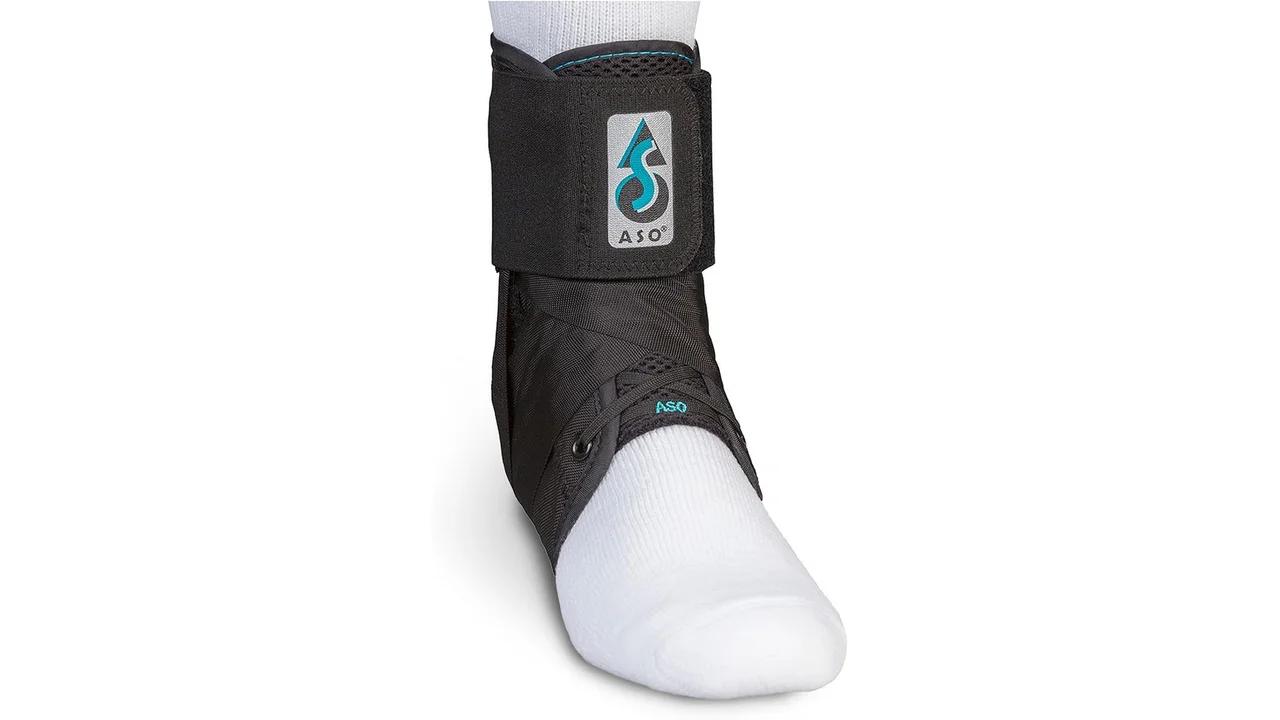
Med Spec ASO Ankle Stabilizer
Lace-up ankle brace with figure-8 straps designed to limit ankle inversion
Does not do — cure the injury on its own. It supports recovery alongside rest, exercises, and medical care when those are needed.
Why consider itThe brace adds some volume inside the shoe. Pairing with a low-profile court shoe is a common approach.
Skip if your ankle is fully healthy — this is for instability or a sprain history.
Why this product — our top fit for this injury by our scoring. The clinical evidence supports this product's category — this exact model has not been independently tested.
Paid link · We may earn a commission from qualifying purchases.
Zamst A2-DX Ankle Brace
Hinged high-support ankle brace for players returning from a sprain
Does not do — cure the injury on its own. It supports recovery alongside rest, exercises, and medical care when those are needed.
Why consider itA hinged, high-support brace for coming back from a sprain — lace it snug, then set the stabilizers; it should feel restrictive at first. Note: this ASIN is for one size/side variant, so confirm your size and left/right on the product page before ordering.
Skip if you only need light support for daily wear — a lace-up sleeve is cheaper and less bulky.
Why this product — our top fit for this injury by our scoring. The clinical evidence supports this product's category — this exact model has not been independently tested.
Paid link · We may earn a commission from qualifying purchases.
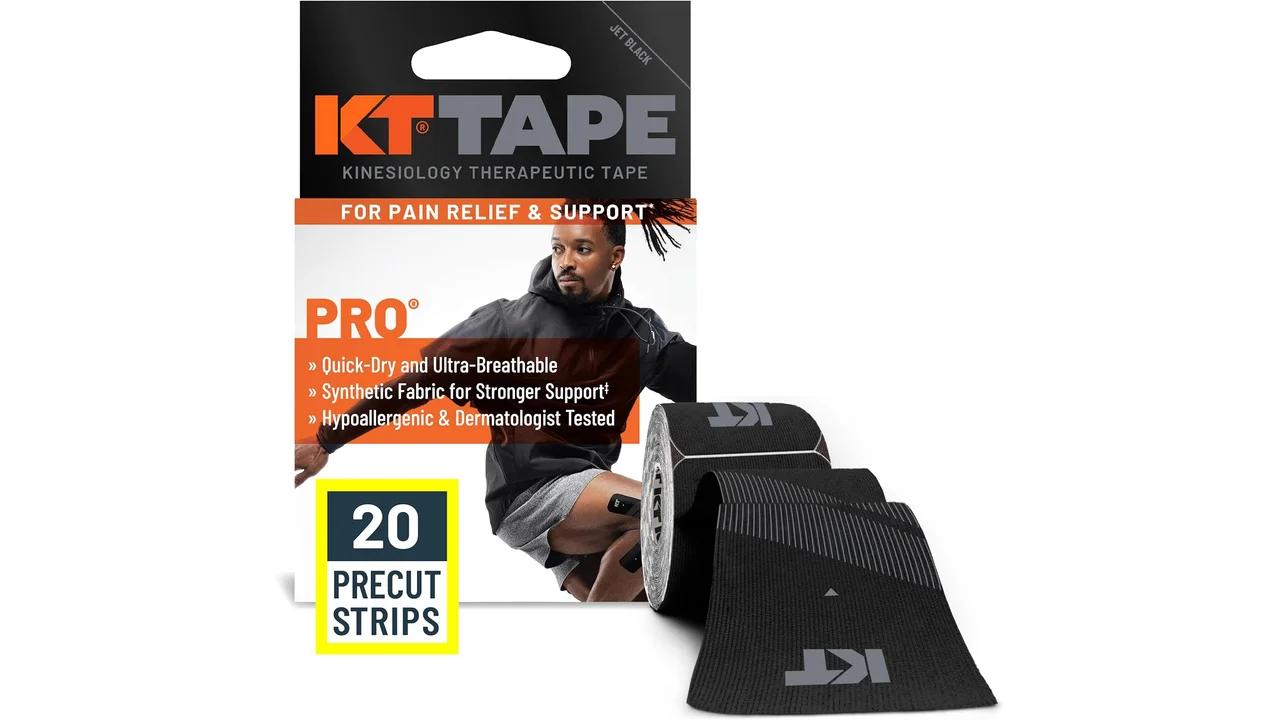
KT Tape Pro Kinesiology Tape (20 Precut Strips)
Synthetic kinesiology tape for flexible muscle and joint support during play
Does not do — cure the injury on its own. It supports recovery alongside rest, exercises, and medical care when those are needed.
Why consider itApply to clean, dry skin at least 30 minutes before play and round the tape corners so it doesn't peel mid-game. Tape supports the area — it doesn't replace rest or strengthening.
Skip if you want rigid support — tape gives flexible, light support only, and a brace will do more for instability.
Why this product — a supporting option for this injury by our scoring. The clinical evidence supports this product's category — this exact model has not been independently tested.
Paid link · We may earn a commission from qualifying purchases.
What support won't do
Support is a tool, not a cure. A sleeve or brace reduces symptoms and lets you keep playing while you rebuild strength and control, but it doesn't fix the root causes: weak stabilizers, poor movement patterns, or volume ramp. The exercises in our injury guides — balance work for ankles, eccentric loading for elbows, grip work for wrists — are what actually protect the joint long-term.
Support also won't protect a joint that's genuinely unstable. If your ankle gives way, your wrist can't bear weight, or your elbow pain is severe and unrelenting, that's a problem for a clinician, not a product.
Sleeve, brace, or tape — which fits your joint?
Same idea, different joints. Sleeves add warmth and light compression, braces restrict motion, and tape gives flexible, short-term support.
| Product | Best for | Watch out for |
|---|---|---|
| McDavidMcDavid Elbow Compression Sleeve | Knit compression sleeve with HEX padding for the elbow and forearm | Skip if you need targeted counterforce pressure on the tendon — a counterforce strap does that job better than a sleeve. |
| MuellerMueller Fitted Wrist Brace | Fitted wrist brace designed to provide compression and limit extreme wrist motion | Skip if you only need support for a few hours of play — a simple wrap may be enough. |
| Med SpecMed Spec ASO Ankle Stabilizer | Lace-up ankle brace with figure-8 straps designed to limit ankle inversion | Skip if your ankle is fully healthy — this is for instability or a sprain history. |
| ZamstZamst A2-DX Ankle Brace | Hinged high-support ankle brace for players returning from a sprain | Skip if you only need light support for daily wear — a lace-up sleeve is cheaper and less bulky. |
| KT TapeKT Tape Pro Kinesiology Tape (20 Precut Strips) | Synthetic kinesiology tape for flexible muscle and joint support during play | Skip if you want rigid support — tape gives flexible, light support only, and a brace will do more for instability. |
As an Amazon Associate I earn from qualifying purchases. Prices change — check the product page for the current price.
Frequently Asked Questions
Sleeve or brace — what's the difference?
A sleeve adds warmth and light compression without restricting motion — it's for soreness and comfort. A brace physically limits specific motions — it's for when a particular movement causes the pain. Sleeves are the lighter option; braces are the more targeted one. Many players use both: a sleeve for daily comfort, a brace for play.
Can I wear a wrist brace while playing?
Yes — a fitted wrist brace with rigid stays is designed to be worn during activity, and many players wear one through full sessions. It limits extreme wrist motion while still allowing you to grip the paddle. If the brace changes your shot mechanics significantly, talk to a coach or clinician about whether it's the right level of support.
Should I tape or brace my ankle after a sprain?
For the first few weeks back, a brace — a lace-up for moderate support, a hinged brace for a more serious sprain. Tape is the lighter option for later, when you're weaning off the brace, or for a few hours of play when a brace feels like too much. Either way, balance and proprioception exercises matter more than the support itself for preventing the next sprain.
How do I know if my ankle brace fits?
It should feel snug and supportive without cutting off circulation or causing numbness. You should be able to wear it inside your court shoe — if it doesn't fit in the shoe, the brace is too bulky for that shoe, not necessarily the wrong size. Lace-up braces add volume, so a low-profile court shoe helps.
Does KT Tape actually work?
The evidence for kinesiology tape is mixed — it provides light, flexible support and sensory feedback, but it doesn't restrict motion the way a brace does, and it won't stabilize a genuinely unstable joint. Players who like it tend to use it for mild support during play or as a bridge off a brace. It's inexpensive, so it's a low-risk thing to try — but don't expect it to do a brace's job.
Related Injury Guides
Wrist Pain
Repetitive strain from paddle grip and snap shots.
De Quervain's Tenosynovitis
Thumb-side wrist tendon irritation from repetitive paddle flicks and dink-level snap motions. Distinct from general wrist pain.
Ankle Instability
Rolling and instability from quick lateral court changes.
Tennis Elbow
Lateral epicondylitis causing outer elbow pain from repetitive swing motion.
Keep Reading
Best Tennis Elbow Braces for Pickleball
Counterforce straps, sleeves, or full braces for pickleball tennis elbow? Honest comparison of the best options and when each works.
The 5-Minute Pickleball Warm-Up
The 5-minute pickleball warm-up routine that prevents tennis elbow, calf strains, and Achilles issues. Do this before every match.
Build Your Personalized Kit
Put what you just read into action. Our selector cross-references your specific pain points against every product in our database.