Golfer's Elbow
Golfer's elbow is one of the most common elbow complaints among pickleball players — and one of the most frequently confused with tennis elbow. The difference is simple and it matters: tennis elbow hurts on the outer side of the elbow, golfer's elbow hurts on the inner side. That inner-elbow pain comes from the wrist flexor tendons, the ones that curl your wrist toward your palm and grip the paddle. Every forehand topspin drive, every hard dink, and every white-knuckle grip loads those tendons. Caught early, golfer's elbow usually responds well to conservative care — rest from the aggravating shots, gentle stretching, and gradual eccentric strengthening. Ignored, it can linger for months and quietly weaken your grip.
Affiliate disclosure: As an Amazon Associate I earn from qualifying purchases. This does not affect our recommendations or rankings.
Medical disclaimer: Consult with a doctor before beginning any exercise program or using any product described on this page. This information is for educational purposes and is not a substitute for professional medical diagnosis or treatment.
What helps fastest for Golfer's Elbow
Reduce volume and avoid the most aggravating shots. Ice after play. Gentle wrist-flexor stretches and forearm self-massage daily. A compression sleeve or counterforce strap during play may help. No heavy loading yet.
These won't cure the injury — nothing you buy will. They reduce symptoms and manage load while the tissue heals, so you can keep moving without making it worse.
 Our pickBest Recovery Aid
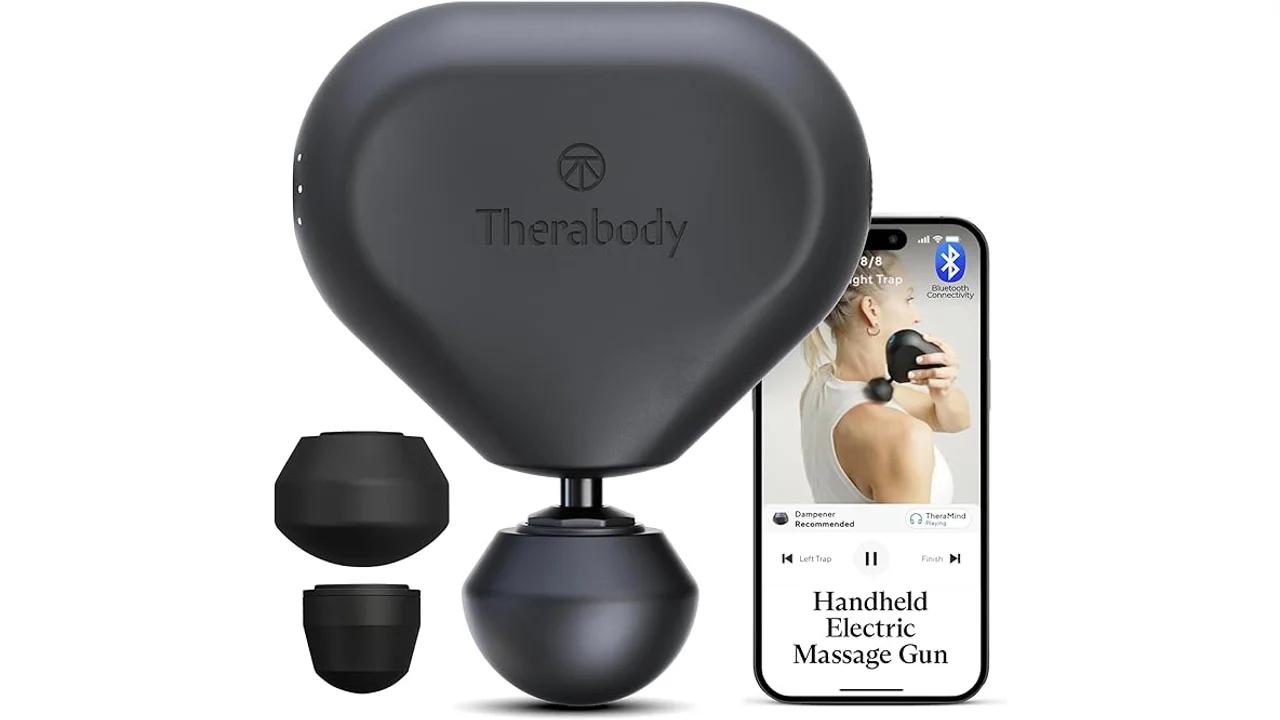
Theragun Mini (2nd Gen)
Portable percussive massager designed for post-activity muscle recovery
Why consider itCommonly applied to the large muscle groups around a sore tendon — calves for Achilles and calf issues, forearms for elbow and wrist issues — rather than directly on the painful tendon or joint. Follow the manufacturer's instructions and check with a clinician before use on an injured area.
Skip if you just need basic soreness relief — a foam roller costs far less.
See today's price on Amazon →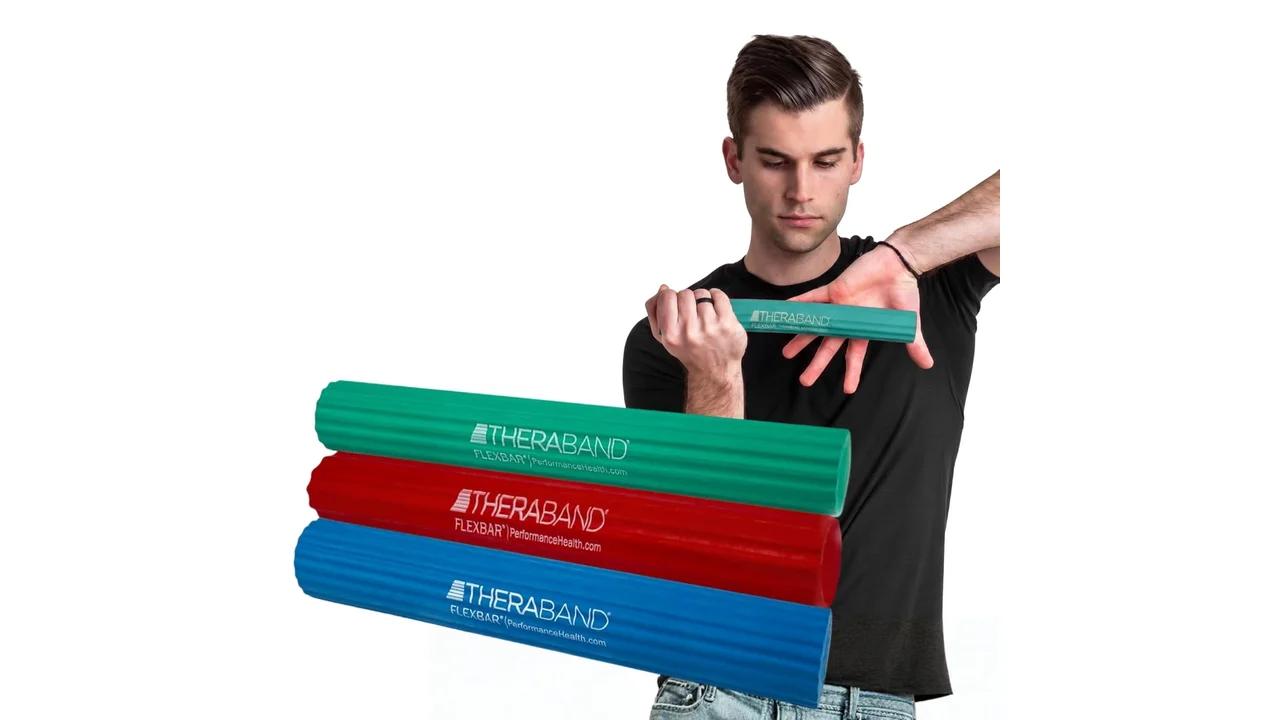 Best Exercise Tool
TheraBand FlexBar Resistance Bar
Resistance bar designed for eccentric wrist-tendon loading (the tool used in the Tyler Twist protocol)
Why consider itMost protocols start with the Red (medium) resistance bar for tennis elbow. Progress to Green (intermediate) only when Red feels easy. Performing the Tyler Twist with good form beats rushing through heavier resistance.
Skip if your elbow pain is acute (first 1–2 weeks) — wait until the flare settles.
See today's price on Amazon →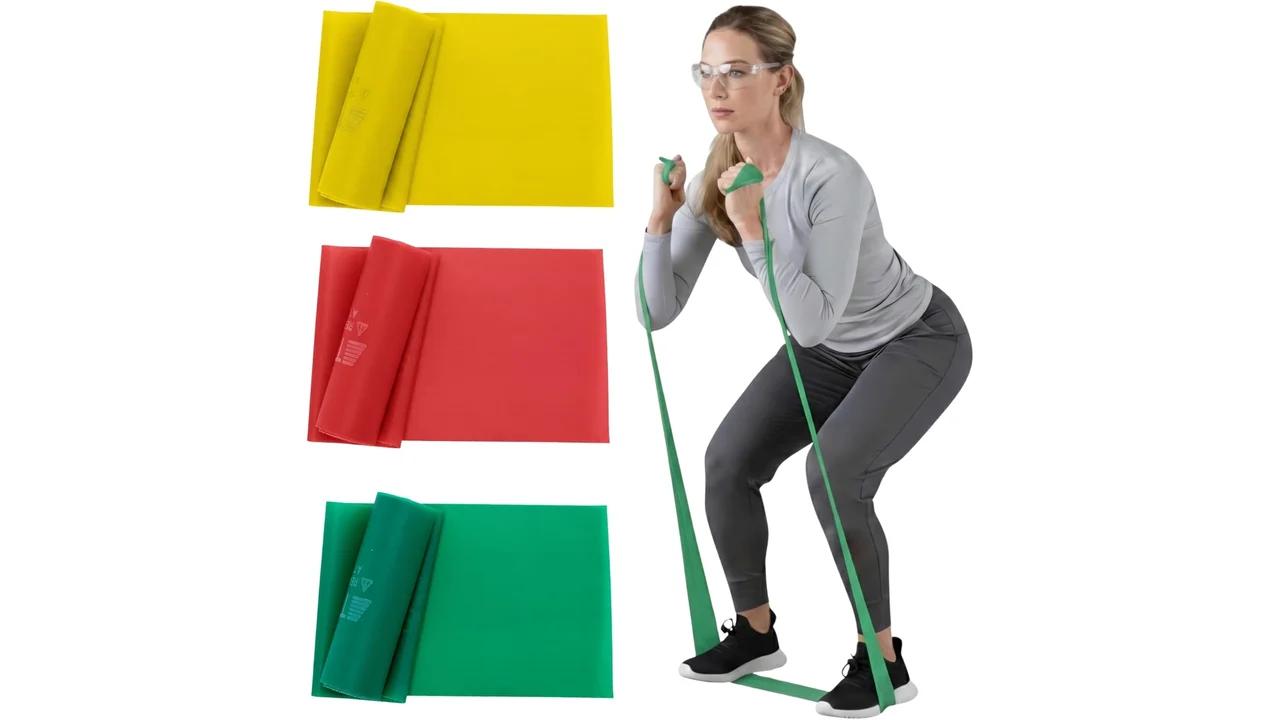 Also helpful
TheraBand Resistance Bands Set — Beginner Kit
Latex resistance bands for the strengthening work behind tendon recovery
Why consider itStart with the lightest band and progress only when you can do 3 sets of 15 pain-free — bands are how the eccentric strengthening from the guides actually gets done at home.
Skip if you already have a set of bands or a FlexBar — this duplicates the same strengthening work.
See today's price on Amazon →See the full gear list for Golfer's Elbow ↓ — every option ranked, with what to skip. As an Amazon Associate I earn from qualifying purchases.
What Is Golfer's Elbow?
Golfer's elbow, medically called medial epicondylitis, affects the tendons that attach the forearm flexor muscles to the medial epicondyle — the bony bump on the inner side of the elbow. These are the muscles that flex your wrist, curl your fingers, and pronate your forearm (turn your palm down). Every time you grip the paddle and snap your wrist through a shot, those tendons tug on their attachment point.
With repeated overload, the tendon tissue can develop small tears and become disorganized rather than cleanly inflamed, which is why clinicians increasingly use the term tendinopathy instead of tendonitis. The practical implication is the same as with other tendon problems: rest alone rarely resolves it. The tendon usually needs a period of reduced load followed by controlled, progressive strengthening to remodel.
Despite the name, you do not need to play golf to get it. In pickleball it is typically a dominant-arm problem — the arm you hold the paddle in — and it often builds gradually over weeks of play rather than arriving with one dramatic moment. That slow onset is part of why players miss it early: the ache after a session feels like ordinary soreness until one day it does not go away.
Why Pickleball Players Get Golfer's Elbow
Pickleball loads the wrist flexors in ways most recreational players are not prepared for:
- Forehand topspin drives — brushing up the back of the ball loads the flexor tendons with every stroke.
- Hard dinks and flicks at the kitchen line — short, wristy shots that rely on the flexors rather than the shoulder.
- Gripping the paddle too tightly — a death grip keeps the flexor muscles under constant tension for the whole session.
- Wrist-snap serves — snapping the wrist through the serve adds a sharp flexor load at the end of the motion.
- Paddle weight and grip size — a heavy paddle or a grip that is too small for your hand makes you squeeze harder to control it.
- Volume ramp-up — going from one session a week to four or five outpaces the tendon's ability to adapt.
- Arming the ball — hitting with the wrist and forearm instead of rotating through the legs and core.
How to Recognize Golfer's Elbow
The symptom pattern is distinctive, and the location is the giveaway. If the pain sits on the inner side of the elbow — the side facing your body when your arm hangs relaxed — golfer's elbow is a likely explanation. Confirm persistent elbow pain with a clinician, because nerve irritation and other elbow problems can feel similar.
- MildA dull ache on the inner elbow after a pickleball session that fades by the next day.
- MildTenderness when you press the bony bump on the inside of the elbow.
- MildMorning stiffness in the inner elbow and forearm that eases once you start moving.
- ModeratePain when gripping the paddle, shaking hands, or turning a doorknob.
- ModeratePain when flexing the wrist against resistance, such as lifting a bag palm-up.
- ModerateAn ache that runs down the inner forearm toward the wrist during play.
- SevereSharp pain with simple daily tasks, like lifting a coffee mug or carrying groceries.
- SevereNoticeable grip weakness — dropping things you would normally hold easily.
- SevereNumbness or tingling running into the ring and pinky fingers, which may signal ulnar nerve irritation.
When It's SeriousNumbness or tingling in the ring and pinky fingers, grip weakness that makes you drop things, or elbow pain that does not improve after several weeks of rest and self-care all warrant a clinician's assessment. The ulnar nerve runs right past the inner elbow, and irritation there needs to be distinguished from a tendon problem because the management differs.
Immediate Self-Care
For early-stage golfer's elbow, consistent home care over several weeks resolves many cases. The goal is to calm the tendon down, then rebuild its capacity gradually — not to rest it into weakness.
Do This
- +Reducing playing volume and easing off the shots that hurt most — usually heavy topspin forehands and wrist-snap serves — is commonly recommended until pain during play decreases. Many players can keep playing at lower intensity with flatter shots.
- +Icing the inner elbow for 10–15 minutes after each session is widely used for symptom relief in the first couple of weeks.
- +Gentle wrist-flexor stretching and forearm self-massage (see exercises) help keep the flexor muscles from staying tight and pulling on the tendon.
- +A counterforce strap or compression sleeve worn during play may reduce the load on the tendon. A clinician can help with proper placement — the strap generally sits on the forearm below the elbow, not on the joint itself.
- +Starting eccentric flexor loading (the Reverse Tyler Twist, see exercises) once the acute pain has settled is the most commonly recommended strengthening approach for this tendon.
Avoid This
- ×Avoid playing through sharp pain or testing the elbow with maximum-effort topspin — pain during play is a signal to back off, not push through.
- ×Avoid aggressive stretching into pain. Gentle, sustained stretches help; forcing the wrist into a painful end range does not.
- ×Avoid relying on a brace alone. A strap may ease symptoms during play, but it does not rebuild tendon capacity — strengthening does.
- ×Avoid cortisone injections into the tendon without discussing the trade-offs with a clinician first. Injections may ease pain short-term, but repeated injections into tendon tissue are generally approached with caution.
Commonly Recommended Exercises
These are general descriptions of exercises that are often part of rehabilitation protocols for this condition. Individual needs vary — consult a licensed physical therapist or physician before starting any exercise program, and stop any movement that causes sharp pain.
Medical disclaimer: Consult with a doctor or licensed physical therapist before beginning any exercise program. This information is for educational purposes and is not a substitute for professional medical diagnosis or treatment. Stop any activity that causes sharp pain.
Reverse Tyler Twist (for Golfer's Elbow)
The mirror-image of the Tyler Twist, targeting medial epicondylitis (golfer's elbow) rather than lateral. Loads the wrist flexor tendon eccentrically. Uses the same FlexBar tool. Included here as a companion for players with inner-elbow pain — tennis elbow and golfer's elbow are frequently confused; the side of the elbow with pain determines which version is appropriate.
How to do it
- 1.Hold the FlexBar vertically with your affected arm gripping the lower end, wrist fully flexed (palm facing you).
- 2.Place your unaffected hand on the top of the bar with your wrist fully extended (back of hand facing you).
- 3.Extend both arms out in front. The bar is twisted in the opposite direction from the Tyler Twist.
- 4.Allow the affected wrist to slowly rotate toward neutral over about 4 seconds, untwisting the bar eccentrically.
- 5.Use the unaffected hand to reset to the starting position.
- 6.Complete 15 reps. Rest 60 seconds. Three sets total.
Confusing the direction. The pain side of the elbow determines the exercise: outer elbow = Tyler Twist, inner elbow = Reverse Tyler Twist. Doing the wrong version loads the healthy tendon and leaves the injured one untreated.
Not for use on the lateral (outer) side of the elbow. A clinician can confirm which version is appropriate and teach correct bar orientation.
Wrist Flexor Stretch
Lengthens the wrist flexor muscles that attach at the inner elbow. Directly reduces the tension that drives golfer's elbow pain. Unlike the prayer stretch, which works both wrists together, this version isolates the painful side one arm at a time.
How to do it
- 1.Extend your painful arm straight in front of you, palm facing up.
- 2.With your other hand, gently pull your fingers back toward your body until you feel a stretch along the inside of the forearm.
- 3.Straighten your elbow fully. You should feel the stretch from the wrist up toward the inner elbow.
- 4.Hold for 30 seconds. Breathe. Release. Repeat three times.
Bending the elbow during the stretch. The elbow must stay straight to reach the flexor tendons that actually hurt.
Stretch should feel like mild tension, not a sharp pull. Back off if you feel tingling into the ring or pinky fingers — that can signal ulnar nerve irritation rather than a muscle stretch.
Forearm Self-Massage
Releases tension in the forearm extensors and flexors. Addresses the muscle belly, not the tendon attachment, which is where most of the problem lives.
How to do it
- 1.Place a lacrosse ball or tennis ball on a table.
- 2.Rest your forearm on top of the ball, palm down.
- 3.Use your body weight to apply pressure. Slowly roll along the length of the forearm from just below the elbow toward the wrist.
- 4.When you hit a tender spot, pause and hold for 20–30 seconds. Breathe until it softens.
- 5.Rotate your arm to palm-up and repeat along the flexor side.
Rolling directly on the bony elbow joint. Stay on the muscle belly — below the elbow, not on it.
Progressive Grip Strengthening
Restores grip endurance, which is almost always reduced when the wrist or elbow tendons are irritated. Grip weakness is both a symptom and a risk factor for recurrence.
How to do it
- 1.Use a soft stress ball, putty, or light grip trainer.
- 2.Squeeze slowly over 2 seconds, hold for 2 seconds, release over 2 seconds.
- 3.Do 15 reps. Rest 60 seconds. Repeat for 3 sets.
- 4.Progress to a firmer resistance only when the current one feels easy and pain-free.
Going too heavy too soon. Grip trainers labeled 'for athletes' are usually far too stiff for an injured tendon.
Prayer Wrist Stretch
Stretches the wrist flexors, which are often tight from gripping the paddle.
How to do it
- 1.Bring your palms together in front of your chest, fingers pointing up.
- 2.Keeping palms pressed together, slowly lower your hands toward your belly button.
- 3.Stop when you feel a stretch along the inside of your forearms.
- 4.Hold 30 seconds. Release. Repeat three times.
Letting the palms come apart as the hands lower. The moment they separate, the stretch is lost.
Equipment That May Help
Ranked by how targeted each product is for your condition. These products may support recovery — they are not a substitute for medical care, and none of them cures the injury on its own. As an Amazon Associate I earn from qualifying purchases. How we choose →
Badges: Best Match is the highest overall fit for this injury by our scoring (evidence 40%, condition fit 30%, user reports 20%, durability 10%). Price bands are approximate, not live prices.
Theragun Mini (2nd Gen)
Portable percussive massager designed for post-activity muscle recovery
Does not do — cure the injury on its own. It supports recovery alongside rest, exercises, and medical care when those are needed.
Why consider itCommonly applied to the large muscle groups around a sore tendon — calves for Achilles and calf issues, forearms for elbow and wrist issues — rather than directly on the painful tendon or joint. Follow the manufacturer's instructions and check with a clinician before use on an injured area.
Skip if you just need basic soreness relief — a foam roller costs far less.
Why this product — our top fit for this injury by our scoring. The clinical evidence supports this product's category — this exact model has not been independently tested.
Paid link · We may earn a commission from qualifying purchases.
TheraBand FlexBar Resistance Bar
Resistance bar designed for eccentric wrist-tendon loading (the tool used in the Tyler Twist protocol)
Does not do — cure the injury on its own. It supports recovery alongside rest, exercises, and medical care when those are needed.
Why consider itMost protocols start with the Red (medium) resistance bar for tennis elbow. Progress to Green (intermediate) only when Red feels easy. Performing the Tyler Twist with good form beats rushing through heavier resistance.
Skip if your elbow pain is acute (first 1–2 weeks) — wait until the flare settles.
Why this product — our top fit for this injury by our scoring. The clinical evidence supports this product's category — this exact model has not been independently tested.
Paid link · We may earn a commission from qualifying purchases.
TheraBand Resistance Bands Set — Beginner Kit
Latex resistance bands for the strengthening work behind tendon recovery
Does not do — cure the injury on its own. It supports recovery alongside rest, exercises, and medical care when those are needed.
Why consider itStart with the lightest band and progress only when you can do 3 sets of 15 pain-free — bands are how the eccentric strengthening from the guides actually gets done at home.
Skip if you already have a set of bands or a FlexBar — this duplicates the same strengthening work.
Why this product — our top fit for this injury by our scoring. The clinical evidence supports this product's category — this exact model has not been independently tested.
Paid link · We may earn a commission from qualifying purchases.
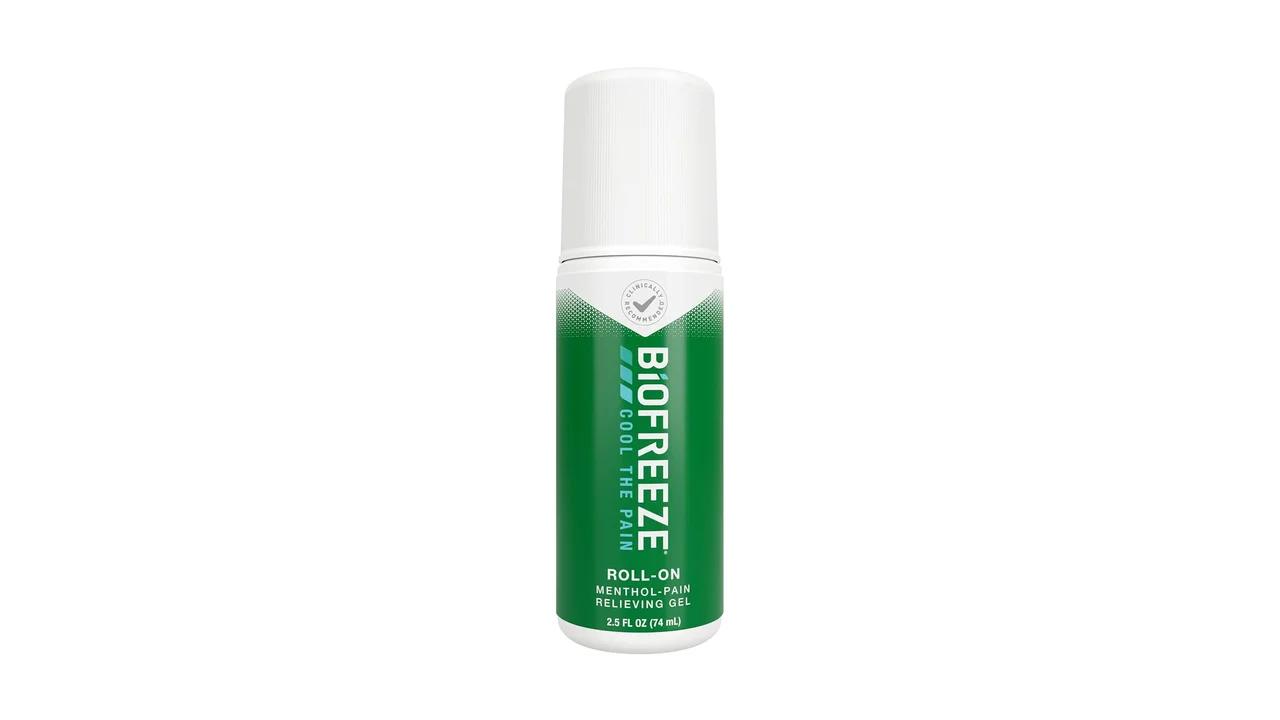
Biofreeze Pain Relief Roll-On
Topical menthol-based product marketed for temporary muscle discomfort
Does not do — cure the injury on its own. It supports recovery alongside rest, exercises, and medical care when those are needed.
Why consider itFollow the product label for usage instructions and precautions. Not intended for use on broken skin or for long-term pain management without medical guidance.
Skip if you want lasting relief — this masks pain temporarily, it doesn't fix the cause.
Why this product — a supporting option for this injury by our scoring. The clinical evidence supports this product's category — this exact model has not been independently tested.
Paid link · We may earn a commission from qualifying purchases.
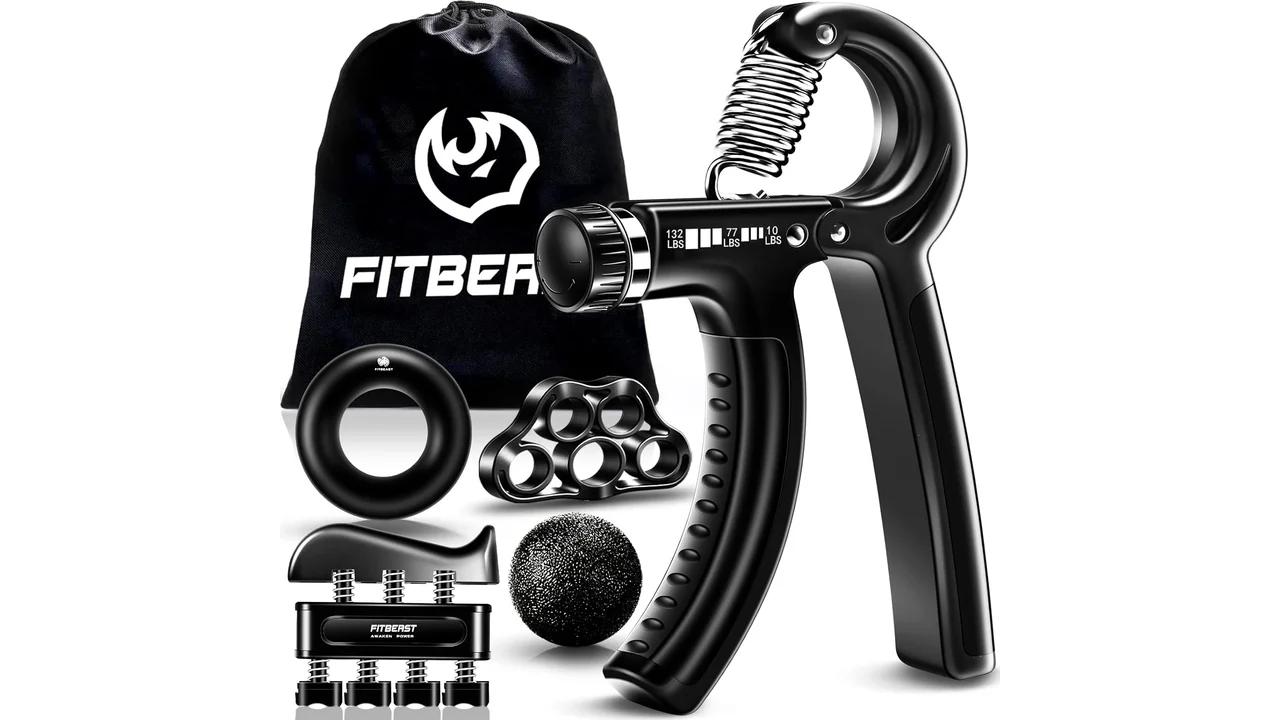
FitBeast Hand Grip Strengthener Kit
Multi-piece grip strengthener set for progressive forearm and hand conditioning
Does not do — cure the injury on its own. It supports recovery alongside rest, exercises, and medical care when those are needed.
Why consider itThe kit includes multiple resistances and a finger exerciser. Starting with the lightest resistance is commonly recommended when rebuilding grip after an injury. A clinician can help choose the right starting load.
Skip if you already have a FlexBar — the grip work overlaps.
Why this product — a supporting option for this injury by our scoring. The clinical evidence supports this product's category — this exact model has not been independently tested.
Paid link · We may earn a commission from qualifying purchases.
When to See a Doctor
Red Flags
- Numbness or tingling in the ring and pinky fingers.
- Grip weakness — dropping objects you would normally hold easily.
- Pain that does not improve after 6–8 weeks of consistent self-care.
- Elbow swelling, locking, catching, or a feeling that the joint gives way.
- Pain at rest or at night that disturbs sleep.
Primary care or sports medicine physicians can make the initial diagnosis, and physical therapists are often the best fit for the rehab phase — eccentric flexor loading is commonly taught and supervised by a PT. If tingling is present, a clinician may check the ulnar nerve. Ultrasound or MRI is sometimes used when the diagnosis is unclear or symptoms persist, and an orthopedic elbow specialist is the usual referral for cases that do not respond to conservative care.
Preventing Golfer's Elbow — Loosen the Grip, Strengthen the Flexors
Most golfer's elbow in pickleball traces back to two things: gripping too hard and loading the flexors faster than they can adapt. Both are fixable habits, and a short forearm warm-up before play covers much of the rest.
- 01Warm up your forearms before every session: 1–2 minutes of gentle wrist circles, flexor stretches, and easy grip squeezes before your first hard shot.
- 02Loosen your grip. Hold the paddle the way you would hold a handshake — firm enough to control it, not so tight your knuckles whiten. Check your grip size too; a grip that is too small makes you squeeze harder.
- 03Strengthen the flexors in the off-season. A few weeks of eccentric flexor work (Reverse Tyler Twist) before you ramp up volume builds the tendon's tolerance.
- 04Vary your shots. If every forehand is a heavy topspin drive, the same tendon takes the same load thousands of times. Mix in flat drives and slices.
- 05Ramp playing volume gradually. Jumping from one session a week to daily play is the most common setup for an overuse tendon problem.
- 06Consider paddle weight. If your forearm is exhausted by the end of every session, a lighter paddle or a different grip circumference may reduce the load — a pro shop can help you try options.
Golfer's Elbow Recovery Timeline
Recovery from this condition typically moves through several phases. Timelines vary by individual — treat these as typical ranges, not guarantees. Click each phase to see what's commonly experienced and the gear often used during that stretch.
Stage 1 — Calm It Down (Weeks 1–3)
Inner-elbow pain with gripping and wrist flexion. Ordinary daily tasks may ache. Playing volume must drop, and topspin shots are usually the first thing to go.
Reduce volume and avoid the most aggravating shots. Ice after play. Gentle wrist-flexor stretches and forearm self-massage daily. A compression sleeve or counterforce strap during play may help. No heavy loading yet.

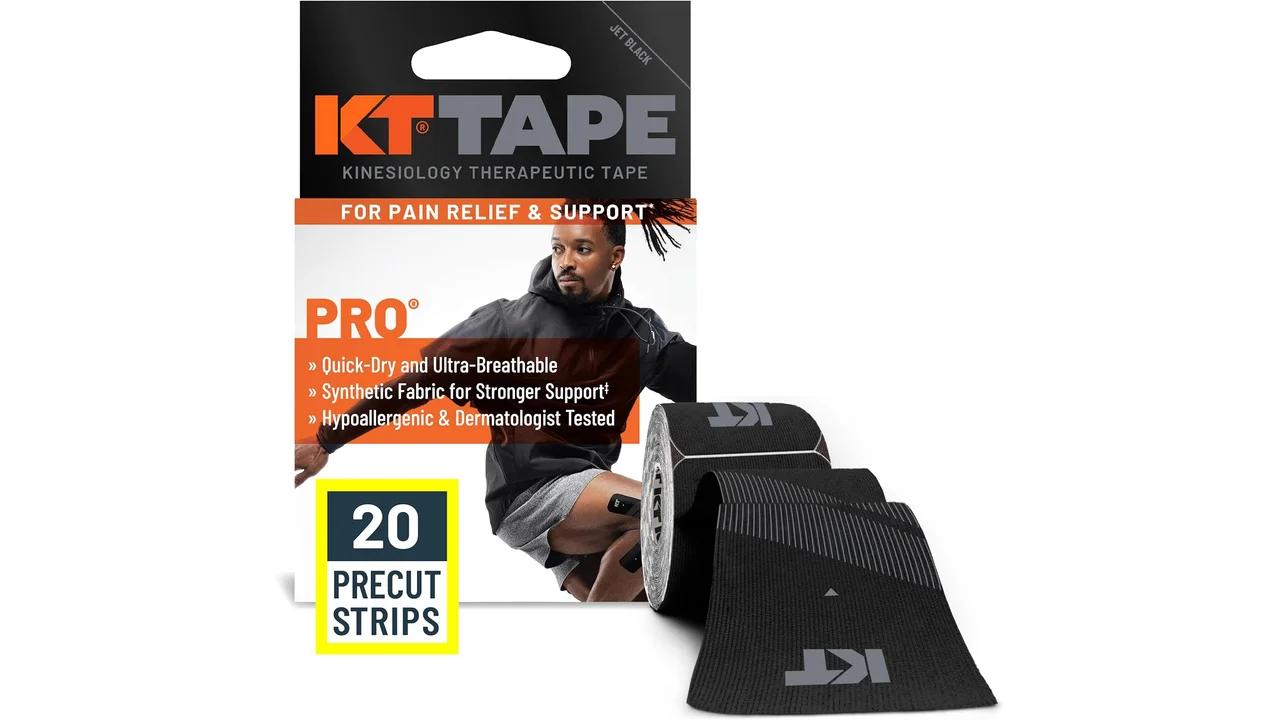
As an Amazon Associate I earn from qualifying purchases. Always consult a clinician before adopting new gear for an injury.
Golfer's Elbow — FAQ
How is golfer's elbow different from tennis elbow?
The side of the elbow with pain is the difference. Tennis elbow (lateral epicondylitis) hurts on the outer side of the elbow and involves the wrist extensor tendons. Golfer's elbow (medial epicondylitis) hurts on the inner side and involves the wrist flexor tendons. The rehab exercises are mirror images of each other — the Tyler Twist targets the outer elbow, the Reverse Tyler Twist targets the inner elbow — so getting the side right matters.
Can I keep playing pickleball with golfer's elbow?
Often yes, at reduced volume. Many players can keep playing with flatter shots, a looser grip, and fewer topspin forehands while the tendon recovers. The tendon usually benefits from some controlled load rather than total rest. Stop and reassess if pain is sharp during play, if grip weakness appears, or if symptoms worsen week over week.
How long does golfer's elbow take to heal?
Early cases treated consistently often improve over 6–12 weeks. Cases that have been present for months can take considerably longer, and recovery varies widely between individuals. Consistency of the eccentric strengthening program is generally the strongest predictor of recovery — more so than rest alone or any single product.
Does an elbow brace help golfer's elbow?
A counterforce strap or compression sleeve worn during play may reduce symptoms by taking some load off the tendon, and many players find one helpful. It is a support, not a cure — it does not rebuild the tendon. Strengthening the flexors gradually is what restores capacity. A clinician can help with strap placement and fit.
When is surgery considered for golfer's elbow?
Surgery is uncommon and is generally only discussed after many months of consistent conservative care — rest, physical therapy, and eccentric loading — have not helped, and only when symptoms meaningfully limit daily life or play. A clinician, usually an orthopedic specialist, makes that call after imaging and examination.
Your recovery kit for Golfer's Elbow
The gear above is ranked for this exact injury. Start with the Quick Relief Kit at the top of this page if you want the short version — or explore another injury if more than one spot hurts.
Sources & Further Reading
Content on this page synthesizes information from the following publicly available sources. We are not affiliated with these organizations and link out for transparency only.
- 01Cleveland Clinic. Golfer's Elbow (Medial Epicondylitis)
- 02American Academy of Orthopaedic Surgeons (OrthoInfo). Medial Epicondylitis (Golfer's Elbow)
- 03ChoosePT (American Physical Therapy Association). Physical Therapy Guide to Golfer's Elbow
- 04MedlinePlus (U.S. National Library of Medicine). Medial epicondylitis — golfer's elbow
- 05Cleveland Clinic Health Essentials. 7 Best Exercises for Golfer's Elbow
Players with Golfer's Elbow often deal with these too — the same movements that strain one area load the others.
Related Injuries
Tennis Elbow
Lateral epicondylitis causing outer elbow pain from repetitive swing motion.
Wrist Pain
Repetitive strain from paddle grip and snap shots.
De Quervain's Tenosynovitis
Thumb-side wrist tendon irritation from repetitive paddle flicks and dink-level snap motions. Distinct from general wrist pain.
Further Reading
The Complete Guide to Pickleball Injuries
Every common pickleball injury explained. Identify what's wrong, find the right recovery protocol, and learn when to see a doctor. Updated 2026.
The Pickleball Recovery Protocol
The evidence-informed recovery protocol for pickleball players. Session-by-session framework: warm-up, post-play routine, weekly maintenance.
How to Prevent Pickleball Injuries
The evidence-informed playbook for preventing pickleball injuries. Shoes, bracing, warm-up, strength work, and technique adjustments that actually work.
Injury Finder
Answer two questions — body area, then exact spot — and we'll point you to the guides, warning signs, and gear that match your pain.
Where it hurts
Golfer's Elbow — see the full body map